
Introduction
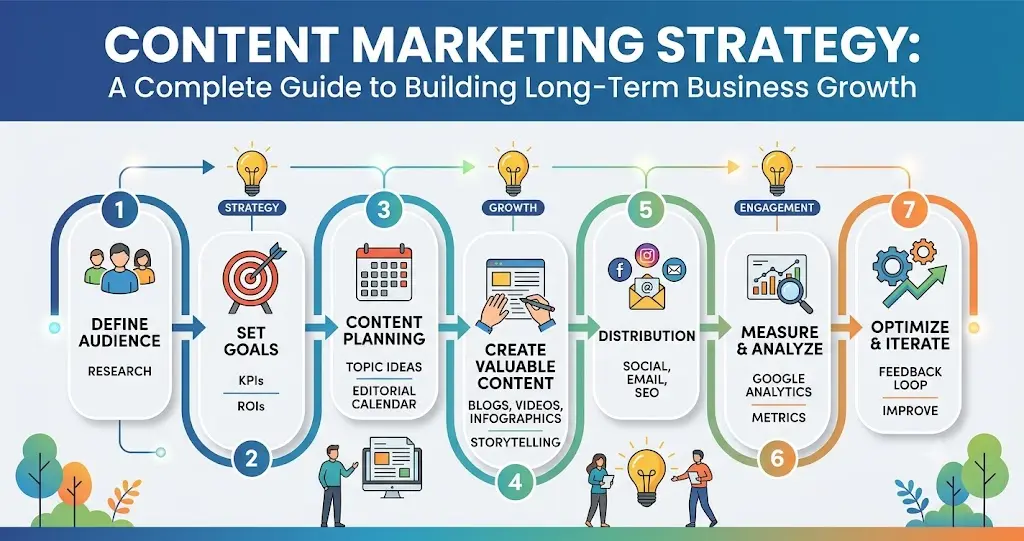
In today’s digital world, businesses need more than traditional advertising to attract and retain customers. Consumers are constantly searching for valuable information before making purchasing decisions. This shift in behavior has made content one of the most powerful tools for building trust, generating leads, and increasing brand awareness. A well-planned Content Marketing Strategy helps businesses create meaningful connections with their target audience while supporting long-term growth.
Unlike direct advertising, content marketing focuses on providing useful information that educates, entertains, or solves problems. Blog posts, videos, infographics, social media content, email newsletters, and guides all play important roles in reaching potential customers. When executed correctly, a Content Marketing Strategy helps businesses become trusted sources of information within their industries.
For beginners, content marketing may seem overwhelming because of the many platforms and content formats available. However, understanding the core principles makes the process much easier. Businesses of all sizes can benefit from creating relevant and consistent content that addresses audience needs.
This guide explains what a Content Marketing Strategy is, why it matters, how to build one step by step, its benefits and risks, common mistakes to avoid, frequently asked questions, and expert recommendations for achieving better results.
What is Content Marketing Strategy?
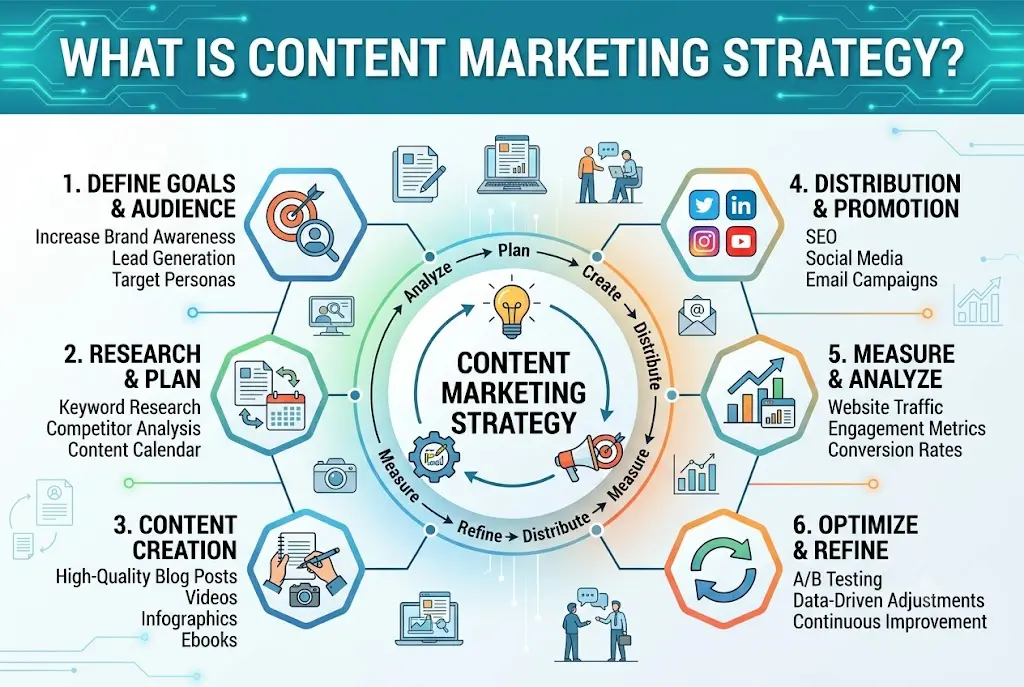
A Content Marketing Strategy is a structured plan for creating, publishing, distributing, and managing content to achieve specific business goals.
Rather than producing content randomly, a strategy ensures that every piece of content serves a purpose and aligns with organizational objectives.
A successful strategy typically includes:
- Audience research
- Content planning
- Keyword research
- Content creation
- Distribution channels
- Performance measurement
- Continuous improvement
For example, a fitness brand may publish workout guides, nutrition tips, and instructional videos to attract health-conscious consumers. This content helps build trust while encouraging potential customers to engage with the brand.
The primary goal is to provide value while guiding audiences through different stages of the customer journey.
Why is Content Marketing Strategy Important?
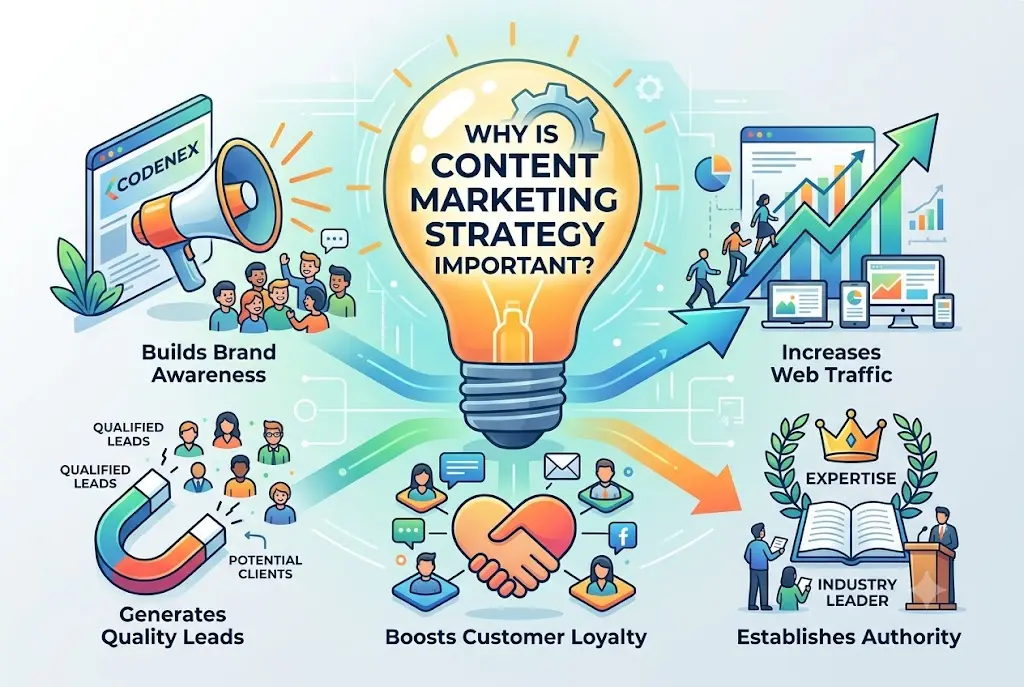
Content marketing plays a critical role in modern business growth.
Builds Brand Awareness
Quality content increases visibility and helps audiences discover your business.
Establishes Trust and Authority
Educational and informative content positions businesses as industry experts.
Improves Search Visibility
Optimized content can help websites attract organic traffic from search engines.
Supports Lead Generation
Valuable content encourages visitors to engage and share their information.
Enhances Customer Relationships
Consistent communication helps maintain long-term connections with customers.
Provides Long-Term Results
Unlike many short-term marketing tactics, content often continues generating traffic and engagement over time.
These advantages make content marketing an essential component of digital marketing success.
Detailed Step-by-Step Guide
Step 1: Define Clear Goals
Every Content Marketing Strategy should begin with specific objectives.
Common goals include:
- Increasing website traffic
- Generating leads
- Building brand awareness
- Improving customer retention
- Increasing sales
Clear goals provide direction and measurable outcomes.
Step 2: Identify Your Target Audience
Understanding your audience is essential.
Consider factors such as:
- Age
- Interests
- Challenges
- Buying behavior
- Preferred platforms
Creating audience personas helps guide content decisions.
Step 3: Conduct Keyword Research
Keyword research helps identify topics your audience is searching for.
Focus on:
- Primary keywords
- Long-tail keywords
- Search intent
- Industry topics
Effective research improves content relevance and visibility.
Step 4: Analyze Competitors
Review competitor content to identify opportunities and gaps.
Evaluate:
- Popular topics
- Content formats
- Engagement levels
- Audience feedback
Competitive analysis helps improve strategy development.
Step 5: Choose Content Types
Different formats appeal to different audiences.
Examples include:
- Blog articles
- Videos
- Podcasts
- Infographics
- Case studies
- Email newsletters
- Social media posts
Diversifying formats can increase reach and engagement.
Step 6: Create a Content Calendar
A content calendar helps maintain consistency.
Include:
- Publishing dates
- Content topics
- Responsible team members
- Distribution channels
Planning improves efficiency and organization.
Step 7: Create High-Quality Content
Quality should always take priority over quantity.
Focus on:
- Accuracy
- Clarity
- Relevance
- Readability
- Originality
Helpful content attracts and retains audiences.
Step 8: Optimize for Search Engines
Search optimization helps improve discoverability.
Best practices include:
- Using relevant keywords naturally
- Writing compelling headings
- Optimizing meta descriptions
- Improving readability
Optimization enhances organic visibility.
Step 9: Promote Content Effectively
Publishing content is only part of the process.
Promote content through:
- Social media
- Email marketing
- Community engagement
- Partnerships
Distribution expands reach and visibility.
Step 10: Measure Performance
Track key metrics such as:
- Website traffic
- Engagement rates
- Conversions
- Time on page
- Lead generation
Data helps identify strengths and improvement opportunities.
Benefits of Content Marketing Strategy
A strong strategy offers numerous advantages:
- Increased website traffic
- Improved brand recognition
- Better audience engagement
- Higher search visibility
- Greater customer trust
- Increased lead generation
- Improved conversion opportunities
- Stronger customer relationships
- Long-term marketing value
- Enhanced authority and credibility
- Cost-effective promotion
- Better audience insights
- Increased social sharing
- Improved customer retention
- Sustainable business growth
For example, a company publishing educational guides may continue attracting visitors long after the content is initially published.
Disadvantages / Risks
While content marketing is highly effective, it also presents challenges.
- Requires significant time investment
- Results may take time to appear
- Consistent content creation is demanding
- Competition can be intense
- Measuring success can be complex
- Content may become outdated
- Resource requirements can increase
- Audience preferences may change
- Poor-quality content can damage credibility
- Distribution challenges may limit reach
Understanding these risks helps businesses plan more effectively.
Common Mistakes to Avoid
Publishing Without a Strategy
Random content creation often produces inconsistent results.
Ignoring Audience Needs
Content should focus on audience interests rather than only business goals.
Focusing Only on Promotion
Educational and helpful content usually performs better than constant sales messages.
Neglecting Search Optimization
Poor optimization can reduce visibility and traffic potential.
Inconsistent Publishing
Regular publishing helps build audience trust and expectations.
Ignoring Analytics
Performance data provides valuable insights for improvement.
Creating Low-Quality Content
Quality remains more important than publishing frequency.
Failing to Update Content
Refreshing older content can improve performance and relevance.
What is a Content Marketing Strategy?
A Content Marketing Strategy is a plan for creating and distributing content to achieve business objectives.
Why is content marketing important?
It helps attract audiences, build trust, improve visibility, and support business growth.
How long does content marketing take to show results?
Results vary, but meaningful improvements often require several months of consistent effort.
Which content format works best?
The best format depends on audience preferences, goals, and industry requirements.
Do small businesses need content marketing?
Yes. Content marketing can help small businesses compete by building visibility and trust.
How often should content be published?
Consistency is more important than frequency. A realistic schedule should be maintained.
How do I measure content marketing success?
Monitor traffic, engagement, conversions, lead generation, and audience growth.
Can old content still provide value?
Yes. Evergreen content can continue generating traffic and engagement for years.
Expert Tips & Bonus Points
Focus on Audience Value
Create content that solves problems and answers questions.
Prioritize Consistency
Consistent publishing helps build trust and momentum.
Repurpose Content
Transform articles into videos, social posts, or infographics.
Build Topic Authority
Cover subjects comprehensively rather than creating unrelated content.
Use Storytelling
Stories make information more memorable and engaging.
Monitor Industry Trends
Stay informed about changing audience interests and market developments.
Improve Content Regularly
Update older articles to maintain accuracy and relevance.
Balance Quality and Quantity
Consistently produce useful content without sacrificing standards.
Encourage Engagement
Invite feedback, comments, and discussions when appropriate.
Think Long Term
Content marketing often delivers the greatest results through patience and consistency.
Conclusion
A successful Content Marketing Strategy is one of the most effective ways to attract audiences, build trust, and support sustainable business growth. By focusing on valuable information rather than direct promotion alone, organizations can establish meaningful relationships with customers while improving visibility and authority within their industries.
This guide explored the definition of a Content Marketing Strategy, its importance, practical implementation steps, benefits, challenges, common mistakes, frequently asked questions, and expert recommendations. These insights demonstrate that successful content marketing requires planning, consistency, and a strong understanding of audience needs.
Although results may not appear immediately, businesses that remain committed to creating valuable content often experience long-term rewards. Improved traffic, stronger customer relationships, greater brand recognition, and increased conversion opportunities are just some of the benefits that can emerge over time.
As digital marketing continues to evolve, content will remain a powerful tool for communication and growth. By applying the strategies outlined in this guide and continuously refining your approach based on performance data, you can build a content marketing system that delivers lasting value for both your audience and your business.
