
Introduction
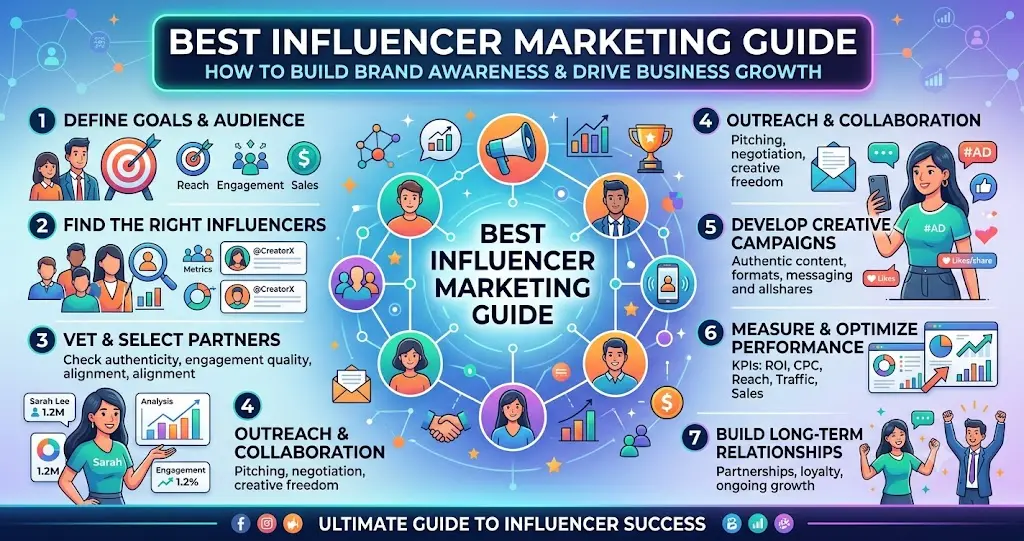
Digital marketing has evolved dramatically over the past decade, and one of the most effective promotional methods today is influencer marketing. Consumers are increasingly relying on recommendations from trusted creators, industry experts, and social media personalities before making purchasing decisions. As a result, businesses of all sizes are investing in influencer partnerships to expand their reach and build stronger connections with target audiences.
An Influencer Marketing Guide helps businesses understand how to collaborate with influencers strategically and effectively. Rather than relying solely on traditional advertising, brands can leverage trusted voices to communicate messages in a more authentic and engaging way. This approach often leads to higher audience engagement, improved trust, and stronger conversion rates.
Influencer marketing is not limited to large corporations. Small businesses, startups, and local brands can also benefit from partnerships with creators who have dedicated and loyal audiences. The key is selecting influencers whose values and audiences align with the brand.
Whether your goal is increasing brand awareness, generating leads, boosting sales, or strengthening customer relationships, influencer marketing can become a valuable part of your overall strategy. This comprehensive Influencer Marketing Guide explains the concept, importance, implementation process, benefits, risks, common mistakes, frequently asked questions, and expert recommendations for achieving successful results.
What is Influencer Marketing Guide?
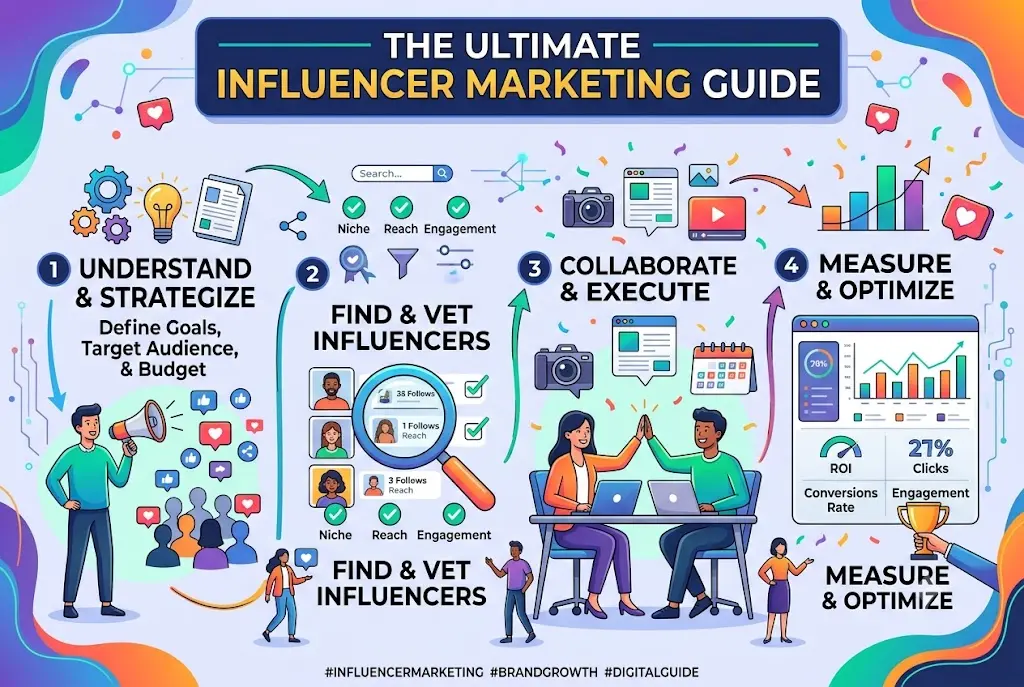
An Influencer Marketing Guide refers to a structured framework that helps businesses understand, plan, and execute influencer marketing campaigns effectively.
Influencer marketing involves partnering with individuals who have established credibility, expertise, or large followings within specific industries or communities. These influencers promote products, services, or brands to their audiences through various content formats.
Common influencer platforms include:
- Social media networks
- Video-sharing platforms
- Blogs
- Podcasts
- Online communities
For example, a fitness brand may collaborate with a fitness creator to showcase workout equipment or health products to an engaged audience.
The goal is to leverage trust and influence to increase brand visibility and customer engagement.
Why is Influencer Marketing Guide Important?
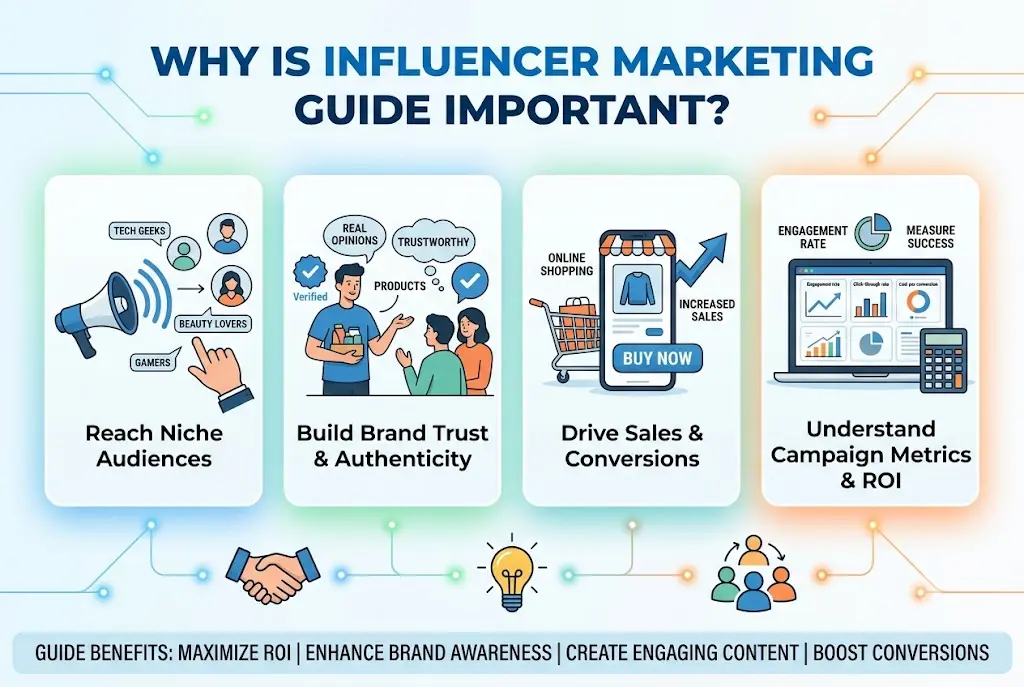
Influencer marketing continues to grow because consumers value authentic recommendations.
Builds Brand Trust
People often trust recommendations from creators they follow regularly.
Expands Audience Reach
Influencers help brands connect with new and relevant audiences.
Improves Engagement
Creator-generated content often receives higher engagement than traditional advertising.
Increases Brand Awareness
Collaborations introduce products and services to potential customers.
Supports Purchasing Decisions
Authentic product demonstrations can encourage conversions.
Enhances Content Creation
Influencers provide fresh and engaging content that brands can utilize.
These advantages make influencer marketing a powerful promotional strategy.
Detailed Step-by-Step Guide
Step 1: Define Campaign Goals
Before selecting influencers, determine your objectives.
Common goals include:
- Brand awareness
- Lead generation
- Product promotion
- Website traffic
- Sales growth
Clear goals improve campaign direction.
Step 2: Identify Your Target Audience
Understanding your audience helps you choose the right influencers.
Consider:
- Age groups
- Interests
- Geographic locations
- Purchasing behavior
- Online activity
Audience alignment improves campaign effectiveness.
Step 3: Research Relevant Influencers
Look for influencers whose audience matches your target market.
Evaluate:
- Content quality
- Engagement rates
- Audience demographics
- Brand compatibility
- Industry relevance
Relevance is often more important than follower count.
Step 4: Evaluate Authenticity
Authenticity is critical for successful campaigns.
Review:
- Audience interactions
- Content consistency
- Past partnerships
- Community trust
Authentic influencers generally produce better results.
Step 5: Establish Campaign Expectations
Clearly define collaboration requirements.
Discuss:
- Content formats
- Posting schedules
- Deliverables
- Performance expectations
Clear communication prevents misunderstandings.
Step 6: Create Valuable Content
Successful influencer campaigns focus on providing value.
Examples include:
- Product reviews
- Tutorials
- Demonstrations
- Behind-the-scenes content
- Educational posts
Helpful content often performs better than direct promotion.
Step 7: Encourage Creative Freedom
Influencers understand their audiences well.
Allow flexibility while maintaining brand guidelines.
Authentic content typically generates stronger engagement.
Step 8: Monitor Campaign Performance
Track key performance indicators.
Examples include:
- Reach
- Engagement
- Website traffic
- Lead generation
- Conversion rates
Performance tracking helps measure effectiveness.
Step 9: Build Long-Term Partnerships
Ongoing collaborations often outperform one-time promotions.
Long-term partnerships improve:
- Trust
- Consistency
- Audience familiarity
- Brand credibility
Relationships can create lasting value.
Step 10: Analyze and Optimize
Review campaign results regularly.
Identify:
- Successful tactics
- Areas for improvement
- Audience preferences
- Future opportunities
Continuous optimization strengthens outcomes.
Benefits of Influencer Marketing Guide
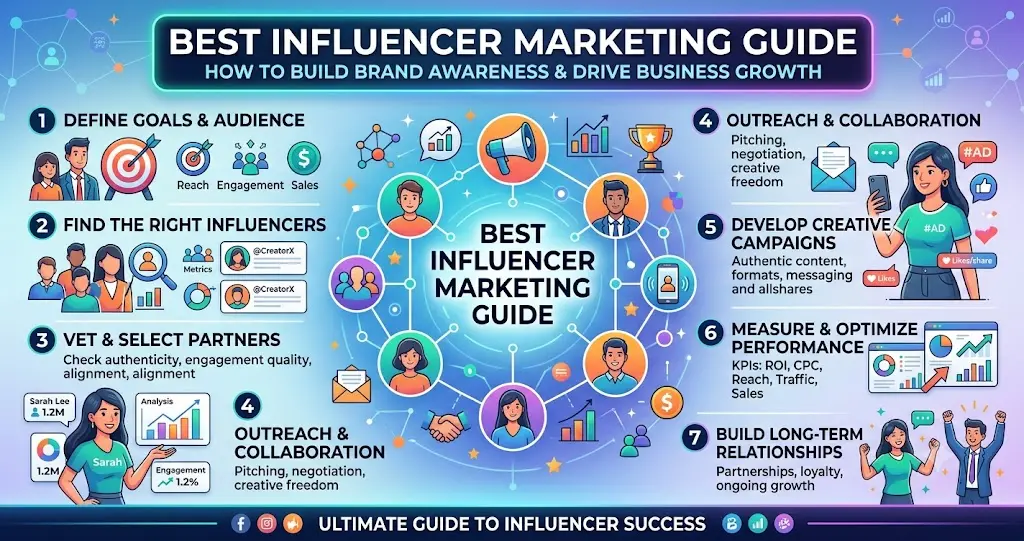
Effective influencer marketing offers numerous advantages.
- Increased brand awareness
- Greater audience reach
- Improved customer trust
- Enhanced engagement
- Higher conversion potential
- Better content creation opportunities
- Stronger community relationships
- Increased website traffic
- Improved social proof
- Better audience targeting
- Enhanced credibility
- Increased lead generation
- Higher customer interest
- Improved return on investment
- Long-term growth opportunities
These benefits make influencer marketing an attractive strategy for businesses.
Disadvantages / Risks
Despite its advantages, influencer marketing has challenges.
- Difficulty selecting suitable influencers
- Potential reputation risks
- High collaboration costs
- Unpredictable campaign results
- Audience mismatch issues
- Brand safety concerns
- Limited control over content
- Changing platform algorithms
- Performance measurement complexity
- Competitive influencer landscape
Understanding these risks helps businesses plan effectively.
Common Mistakes to Avoid
Choosing Influencers Based Only on Followers
Large audiences do not always guarantee results.
Ignoring Audience Relevance
Audience alignment is essential for campaign success.
Focusing Only on Sales
Influencer marketing also supports awareness and trust building.
Lack of Clear Objectives
Undefined goals make success difficult to measure.
Restricting Creative Freedom
Overly controlled content may appear less authentic.
Neglecting Performance Tracking
Data is necessary for evaluating campaign effectiveness.
Ignoring Long-Term Relationships
Consistent collaborations often deliver better outcomes.
Failing to Research Influencers
Proper evaluation reduces potential risks.
What is influencer marketing?
Influencer marketing involves collaborating with individuals who can influence audience opinions and purchasing decisions.
Why is influencer marketing effective?
It combines audience trust, authentic communication, and targeted reach.
Can small businesses use influencer marketing?
Yes. Many small businesses work successfully with niche and local influencers.
How do businesses choose influencers?
Businesses evaluate audience relevance, engagement rates, credibility, and content quality.
What types of influencers exist?
Common categories include nano, micro, macro, and celebrity influencers.
How is campaign success measured?
Success is measured using metrics such as engagement, traffic, leads, and conversions.
Is influencer marketing expensive?
Costs vary depending on audience size, industry, and campaign requirements.
Should businesses build long-term partnerships?
Yes. Long-term collaborations often improve trust and campaign performance.
Expert Tips & Bonus Points
Prioritize Audience Quality
Engaged audiences often outperform larger but inactive followings.
Focus on Authentic Partnerships
Authenticity strengthens credibility and trust.
Start with Smaller Campaigns
Testing helps identify effective strategies before scaling.
Encourage Storytelling
Stories create stronger emotional connections.
Monitor Engagement Rates
High engagement often indicates audience loyalty.
Build Long-Term Relationships
Consistent partnerships improve brand recognition.
Diversify Influencer Types
Working with multiple creators can expand reach.
Track Meaningful Metrics
Focus on business outcomes rather than vanity metrics.
Stay Updated on Trends
Influencer marketing evolves rapidly.
Think Beyond Immediate Sales
Brand awareness and trust are valuable long-term benefits.
Conclusion
An Influencer Marketing Guide provides businesses with a roadmap for building successful partnerships that increase visibility, engagement, and customer trust. As consumers continue to seek authentic recommendations, influencer marketing remains one of the most effective ways to connect with targeted audiences and strengthen brand recognition.
Throughout this guide, we explored the fundamentals of influencer marketing, including its definition, importance, implementation process, benefits, challenges, common mistakes, frequently asked questions, and expert recommendations. These insights demonstrate that successful influencer marketing requires strategic planning, careful influencer selection, clear communication, and ongoing performance evaluation.
While influencer campaigns may require investment and effort, the potential rewards can be significant. Increased brand awareness, stronger customer relationships, improved engagement, and higher conversion opportunities make influencer marketing a valuable component of modern business growth strategies.
As digital platforms continue to evolve, businesses that focus on authenticity, audience relevance, and long-term relationship building will be better positioned for success. By applying the principles outlined in this Influencer Marketing Guide, organizations can create meaningful influencer partnerships that support sustainable growth and lasting brand impact.
