
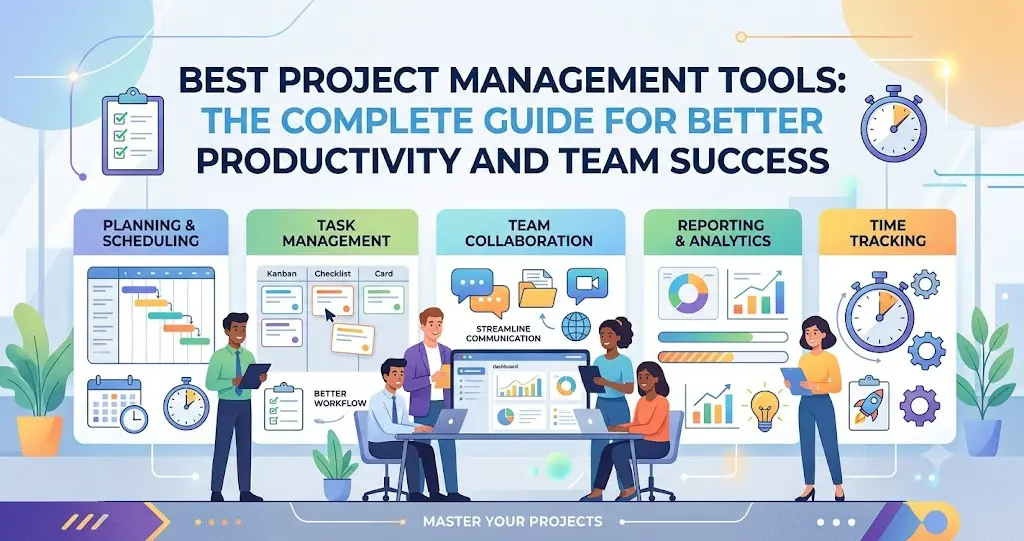
Introduction
Managing projects effectively has become one of the biggest challenges for businesses, freelancers, startups, and growing teams. As workloads increase and projects become more complex, keeping track of deadlines, tasks, team responsibilities, and progress can quickly become overwhelming. This is why many organizations rely on the best project management tools to stay organized and productive.
Project management tools are designed to simplify planning, collaboration, communication, and execution. Instead of using multiple spreadsheets, emails, and messaging platforms, teams can manage everything from a centralized workspace. These tools provide visibility into project progress, help allocate resources efficiently, and ensure that everyone stays aligned with organizational goals.
Whether you are managing a small team, running a startup, or coordinating large-scale projects, the right project management software can dramatically improve workflow efficiency. Modern solutions include task tracking, reporting, file sharing, automation, scheduling, and collaboration features that support both remote and office-based teams.
Choosing from the many available options can feel challenging, especially for beginners. Some tools focus on simplicity, while others offer advanced capabilities for larger organizations. Understanding your needs is essential before making a decision.
This guide explores everything you need to know about the best project management tools, including their importance, key features, implementation strategies, benefits, risks, and expert recommendations. By the end, you will have a clear understanding of how to select and use project management software successfully.
What is Best Project Management Tools?

The best project management tools are software solutions designed to help individuals and teams plan, organize, execute, and monitor projects efficiently. These platforms provide a structured environment where users can create tasks, assign responsibilities, track progress, and communicate effectively.
Project management software serves as a central hub for project-related activities. Instead of relying on scattered information across different applications, team members can access everything they need from a single location.
Most project management tools include features such as:
- Task management
- Team collaboration
- Project scheduling
- File sharing
- Progress tracking
- Time management
- Reporting and analytics
- Workflow automation
For example, a marketing team launching a new campaign can use project management software to assign responsibilities, set deadlines, share files, monitor progress, and communicate updates without relying on lengthy email chains.
These tools improve visibility and accountability, helping teams complete projects more efficiently while reducing confusion and delays.
Why is Best Project Management Tools Important?

Organizations of all sizes face challenges related to planning, communication, coordination, and execution. Project management tools address these challenges by providing structure and clarity.
Improved Organization
Projects often involve multiple tasks, deadlines, and stakeholders. Project management software helps organize information and ensures nothing is overlooked.
Better Collaboration
Team members can communicate, share updates, and collaborate in real time. This reduces misunderstandings and improves efficiency.
Enhanced Productivity
Employees spend less time searching for information and more time completing meaningful work.
Clear Accountability
Everyone knows their responsibilities, deadlines, and priorities. This creates greater accountability across the team.
Better Resource Management
Managers can allocate resources effectively and avoid overloading team members.
Increased Visibility
Project leaders gain real-time insights into progress, bottlenecks, and potential risks.
Stronger Decision-Making
Detailed reporting and analytics provide valuable data that supports informed decisions.
Improved Customer Satisfaction
Projects completed on time and within scope often lead to happier clients and stronger business relationships.
Detailed Step-by-Step Guide
Step 1: Define Project Goals
Before implementing project management software, establish clear objectives.
Examples include:
- Improving productivity
- Enhancing communication
- Meeting deadlines consistently
- Reducing project delays
- Increasing team accountability
Clearly defined goals help determine which features are most important.
Step 2: Assess Team Requirements
Different teams have different needs.
Consider factors such as:
- Team size
- Project complexity
- Industry requirements
- Remote work needs
- Budget constraints
Understanding these requirements helps narrow your options.
Step 3: Identify Essential Features
Not every project management tool offers the same capabilities.
Create a list of must-have features such as:
- Task management
- Team collaboration
- Scheduling tools
- Reporting dashboards
- Mobile access
- Automation capabilities
Focus on features that align with business objectives.
Step 4: Compare Available Solutions
Research multiple project management platforms before making a decision.
Compare:
- Pricing
- Features
- Ease of use
- Customer support
- Scalability
- Security
This comparison helps identify the best fit for your organization.
Step 5: Test Free Trials
Most software providers offer trial versions.
During testing:
- Create sample projects.
- Assign tasks.
- Explore reporting features.
- Evaluate user experience.
- Test mobile functionality.
Hands-on experience often reveals strengths and weaknesses that marketing materials cannot show.
Step 6: Plan Implementation
A successful rollout requires preparation.
Create an implementation plan that includes:
- Training schedules
- Data migration
- User permissions
- Workflow setup
- Communication strategies
Proper planning reduces disruption.
Step 7: Train Team Members
Employee adoption is critical.
Provide training on:
- Navigation
- Task creation
- Reporting
- Collaboration tools
- Notifications
Well-trained users are more likely to embrace the platform.
Step 8: Customize Workflows
Most project management tools allow customization.
Examples include:
- Custom task statuses
- Workflow automation
- Team dashboards
- Reporting templates
Customization improves efficiency and user satisfaction.
Step 9: Monitor Performance
Track key metrics after implementation.
Important indicators may include:
- Project completion rates
- Team productivity
- Deadline compliance
- Resource utilization
- Customer satisfaction
Regular evaluation helps maximize results.
Step 10: Continuously Improve
Project management is an ongoing process.
Review workflows regularly and make adjustments based on team feedback and performance data.
Key Features of the Best Project Management Tools

Task Management
Task management is the foundation of project management software.
Users can:
- Create tasks
- Assign responsibilities
- Set deadlines
- Add descriptions
- Track progress
This ensures everyone understands their responsibilities.
Project Scheduling
Scheduling tools help teams plan timelines and milestones.
Common scheduling features include:
- Calendars
- Timelines
- Gantt charts
- Milestone tracking
These tools improve planning accuracy.
Team Collaboration
Collaboration features encourage communication and teamwork.
Examples include:
- Comments
- Shared workspaces
- Discussion boards
- Real-time updates
Strong collaboration reduces delays and misunderstandings.
File Sharing
Project-related documents can be stored and shared within the platform.
Benefits include:
- Easy access
- Improved organization
- Reduced email clutter
- Better version control
Time Tracking
Time tracking helps monitor productivity and project costs.
Organizations can analyze:
- Employee workloads
- Project profitability
- Resource allocation
Accurate time data supports better planning.
Workflow Automation
Automation eliminates repetitive tasks and increases efficiency.
Examples include:
- Task assignments
- Status updates
- Notifications
- Approval workflows
Automation allows teams to focus on higher-value activities.
Reporting and Analytics
Detailed reports provide visibility into project performance.
Managers can track:
- Project progress
- Team productivity
- Budget performance
- Resource utilization
This information supports better decision-making.
Mobile Accessibility
Mobile applications allow users to stay connected while working remotely or traveling.
Benefits include:
- Instant updates
- Improved responsiveness
- Greater flexibility
- Enhanced productivity
Popular Categories of Project Management Tools
Traditional Project Management Software
These solutions focus on detailed planning, scheduling, and resource management.
They are commonly used for complex projects with multiple stakeholders.
Agile Project Management Tools
Agile platforms support iterative project execution and continuous improvement.
They are popular among software development teams and fast-moving organizations.
Collaboration-Focused Platforms
These tools emphasize communication and teamwork while still providing project management capabilities.
They are ideal for distributed teams.
Industry-Specific Solutions
Some platforms are designed for specific industries such as construction, healthcare, marketing, or engineering.
These tools often include specialized workflows and compliance features.
Benefits of Best Project Management Tools
The best project management tools provide significant advantages for businesses, teams, freelancers, and organizations of all sizes. When implemented correctly, these solutions can improve efficiency, communication, and project outcomes.
Improved Team Collaboration
Project management software creates a centralized environment where team members can communicate and collaborate effectively.
Benefits include:
- Faster communication
- Shared project visibility
- Better coordination
- Reduced misunderstandings
When everyone has access to the same information, teamwork becomes more productive.
Better Task Organization
Managing dozens of tasks manually can become overwhelming.
Project management tools help teams:
- Prioritize work
- Assign responsibilities
- Track deadlines
- Monitor progress
This structure reduces confusion and keeps projects moving forward.
Increased Productivity
Employees spend less time searching for information and more time completing important work.
Automation features further improve efficiency by handling repetitive activities such as reminders, notifications, and status updates.
Enhanced Time Management
Time tracking and scheduling features help teams use their working hours more effectively.
Managers can identify:
- Time-consuming activities
- Productivity bottlenecks
- Resource shortages
This information supports better planning and execution.
Improved Accountability
Project management platforms clearly define responsibilities.
Each team member knows:
- What tasks they own
- When deadlines occur
- What progress is expected
This accountability encourages better performance and reliability.
Better Resource Allocation
Managers can monitor workloads and distribute tasks fairly across the team.
This helps prevent:
- Employee burnout
- Resource shortages
- Project delays
Balanced workloads improve both productivity and employee satisfaction.
Stronger Communication
Communication tools reduce the need for long email chains and scattered conversations.
Team members can:
- Share updates
- Ask questions
- Provide feedback
- Resolve issues quickly
Efficient communication contributes to smoother project execution.
Improved Project Visibility
Managers gain real-time insights into project status.
They can quickly identify:
- Delayed tasks
- Budget concerns
- Resource constraints
- Performance issues
Greater visibility enables faster decision-making.
Better Customer Satisfaction
Projects completed on time and within scope often result in happier customers.
Satisfied clients are more likely to:
- Return for future business
- Provide referrals
- Leave positive feedback
Scalability
As organizations grow, project management software can accommodate larger teams and more complex workflows.
This flexibility supports long-term business growth.
Disadvantages / Risks
Although project management tools offer many benefits, businesses should also understand potential drawbacks.
Initial Learning Curve
Some platforms require time and training before users become comfortable with the system.
Without proper onboarding, adoption rates may suffer.
Implementation Costs
Costs can include:
- Subscription fees
- Setup expenses
- Employee training
- Data migration
Organizations should evaluate total ownership costs before making a decision.
Overcomplicated Features
Certain platforms contain advanced features that small teams may never use.
Feature overload can make systems feel unnecessarily complex.
Resistance to Change
Employees sometimes prefer existing workflows and may resist adopting new software.
Strong leadership and training help overcome this challenge.
Data Security Concerns
Project management systems often contain sensitive information.
Businesses must ensure:
- Strong passwords
- Access controls
- Secure storage
- Regular backups
Proper security practices reduce risk.
Dependence on Technology
If a platform experiences technical issues, productivity may be affected temporarily.
Having backup procedures can minimize disruptions.
Poor Setup Can Reduce Value
Even excellent software may fail if workflows are poorly designed.
Successful implementation requires planning and ongoing management.
Subscription Costs Over Time
Monthly fees can increase as organizations add users and advanced features.
Businesses should consider long-term scalability costs.
Common Mistakes to Avoid
Many organizations fail to maximize the value of project management software because of avoidable mistakes.
Choosing Software Without Defining Goals
Before selecting a platform, determine what problems you want to solve.
Examples include:
- Improving collaboration
- Meeting deadlines
- Increasing productivity
- Enhancing reporting
Clear objectives simplify the selection process.
Prioritizing Price Over Value
The cheapest option may lack essential features.
Instead of focusing solely on cost, evaluate:
- Functionality
- Support quality
- Scalability
- Ease of use
Ignoring User Experience
Complicated systems often discourage adoption.
Choose software that employees can learn and use comfortably.
Failing to Train Employees
Training is essential for long-term success.
Without proper education, users may:
- Avoid the platform
- Enter inaccurate data
- Miss important features
Overloading Teams With Features
Introducing every feature at once can overwhelm users.
Start with core functionality and expand gradually.
Neglecting Workflow Standardization
Inconsistent processes create confusion.
Develop standard procedures for:
- Task creation
- Status updates
- Reporting
- Communication
Consistency improves efficiency.
Ignoring Data Accuracy
Project data should remain current and accurate.
Regular reviews help eliminate:
- Duplicate information
- Outdated records
- Incorrect details
Failing to Measure Results
Organizations should monitor key performance indicators after implementation.
Examples include:
- Completion rates
- Productivity metrics
- Customer satisfaction
- Team engagement
Tracking results helps identify opportunities for improvement.
What are project management tools?
Project management tools are software applications that help teams plan, organize, execute, and monitor projects. They provide features such as task management, scheduling, collaboration, reporting, and resource allocation.
Why are project management tools important?
These tools improve organization, communication, productivity, and accountability. They help teams complete projects efficiently while reducing delays and confusion.
Are project management tools suitable for small businesses?
Yes. Many platforms are designed specifically for small businesses and startups. They offer affordable pricing, user-friendly interfaces, and scalable features.
How do project management tools improve productivity?
They reduce manual work, automate repetitive tasks, centralize information, and improve collaboration. Employees spend less time searching for information and more time completing meaningful work.
What features should beginners prioritize?
Beginners should focus on:
Task management
Team collaboration
Scheduling tools
Reporting dashboards
Mobile access
File sharing
These features provide a strong foundation for successful project management.
Can project management software support remote teams?
Absolutely. Most modern platforms include cloud-based access, real-time collaboration, file sharing, and mobile applications that support remote work environments.
How much does project management software cost?
Pricing varies widely. Some platforms offer free plans, while premium solutions charge monthly fees based on users, features, or project requirements.
Is project management software difficult to learn?
Most modern solutions prioritize user experience. With proper training and onboarding, employees can usually become comfortable with the platform quickly.
How long does implementation take?
Simple implementations may take only a few days, while larger organizations may require several weeks for setup, training, and customization.
How do I choose the best project management tools?
Consider factors such as:
Business goals
Team size
Budget
Required features
Ease of use
Customer support
Scalability
Testing free trials can help identify the most suitable option.
Expert Tips & Bonus Points
Selecting the best project management tools is only the first step. Long-term success depends on how effectively the software is used.
Expert Tip 1: Start With Core Features
Many teams attempt to use every feature immediately.
Instead:
- Learn the basics.
- Establish workflows.
- Expand gradually.
This approach improves adoption and reduces confusion.
Expert Tip 2: Focus on Team Adoption
Even the best software delivers little value if employees refuse to use it.
Encourage adoption through:
- Training
- Support
- Clear expectations
- Demonstrated benefits
Expert Tip 3: Keep Communication Centralized
Encourage teams to communicate within the platform whenever possible.
Centralized communication improves transparency and reduces information loss.
Expert Tip 4: Use Automation Wisely
Automation can save significant time.
Useful automation examples include:
- Task assignments
- Deadline reminders
- Approval workflows
- Progress notifications
However, avoid excessive automation that may create unnecessary complexity.
Expert Tip 5: Review Reports Regularly
Project data provides valuable insights.
Analyze reports to identify:
- Delays
- Resource issues
- Productivity trends
- Improvement opportunities
Regular reviews support continuous growth.
Expert Tip 6: Maintain Accurate Data
Project management systems rely on accurate information.
Encourage team members to update tasks, deadlines, and progress consistently.
Expert Tip 7: Conduct Regular Process Reviews
Business needs change over time.
Schedule periodic evaluations to ensure workflows remain effective and aligned with organizational goals.
Bonus Point: Integrate Other Business Tools
Project management software becomes more powerful when connected with:
- Communication platforms
- Customer relationship management systems
- Accounting software
- Document storage solutions
Integrations reduce manual work and improve efficiency.
Bonus Point: Encourage Transparency
Visible project information promotes accountability and trust.
When team members understand priorities and progress, collaboration becomes stronger.
Conclusion
The best project management tools have become essential for organizations that want to improve productivity, collaboration, and project success. As businesses grow and projects become increasingly complex, relying on spreadsheets, emails, and manual processes often leads to inefficiencies, missed deadlines, and communication challenges. Project management software provides a centralized solution that helps teams stay organized and focused on achieving their objectives.
These tools offer a wide range of capabilities, including task management, scheduling, reporting, collaboration, automation, and resource allocation. By bringing all project-related activities into one platform, organizations gain better visibility, stronger accountability, and improved decision-making. Teams can communicate more effectively, monitor progress in real time, and address issues before they become major problems.
However, selecting the right software requires careful planning. Businesses should evaluate their goals, budget, team requirements, and desired features before making a decision. Successful implementation also depends on employee training, process standardization, and ongoing optimization.
The best project management tools are not necessarily the most expensive or feature-rich solutions. Instead, they are the platforms that align closely with your business needs and help your team work more efficiently. By applying the strategies and recommendations outlined in this guide, organizations can choose a solution that supports productivity, strengthens collaboration, and contributes to long-term growth and project success.
