
Introduction
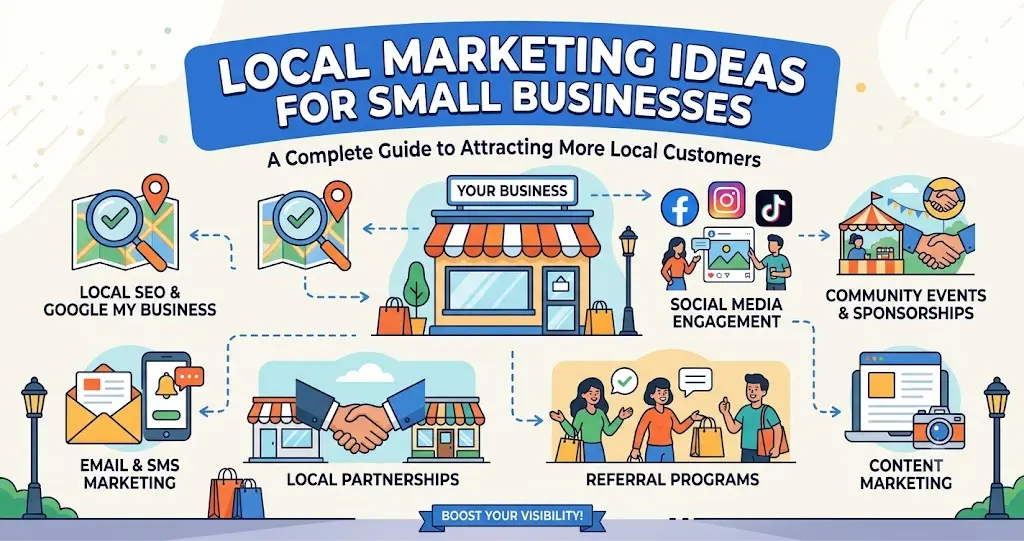
Local Marketing Ideas for Small Businesses, attracting local customers is often the key to long-term success. While large companies may have national or global reach, small businesses typically depend on their local communities for consistent sales and growth. This makes local marketing one of the most valuable investments a business owner can make.
Local marketing focuses on promoting products and services to people within a specific geographic area. Whether you own a restaurant, retail store, salon, repair service, fitness center, or consulting business, connecting with nearby customers can help increase visibility and strengthen customer relationships.
Modern consumers often search online before visiting a local business. They compare reviews, check business information, browse social media pages, and look for recommendations. Because of this behavior, small businesses need a combination of digital and offline marketing techniques to remain competitive.
Fortunately, effective local marketing does not always require a large budget. Many successful strategies involve building relationships, improving community engagement, and maintaining a strong online presence. With the right approach, even small businesses can compete effectively against larger competitors.
This guide explores Local Marketing Ideas for Small Businesses, explains why local marketing matters, provides a practical step-by-step implementation plan, discusses benefits and risks, highlights common mistakes, answers frequently asked questions, and shares expert recommendations for achieving better results.
What is Local Marketing Ideas for Small Businesses?
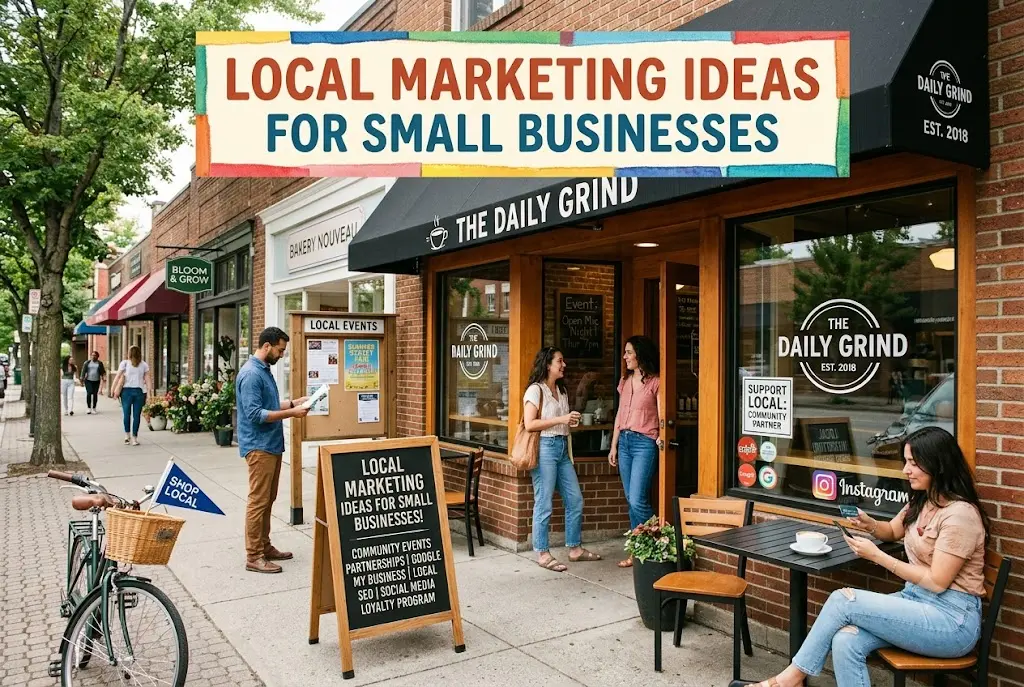
Local Marketing Ideas for Small Businesses refer to strategies and promotional activities designed to attract customers from a specific geographic area.
Unlike broad marketing campaigns that target large audiences, local marketing focuses on reaching nearby consumers who are most likely to visit a physical location or use local services.
Examples include:
- Local SEO
- Community sponsorships
- Social media marketing
- Referral programs
- Customer reviews
- Local events
- Direct mail campaigns
- Business partnerships
These methods help businesses strengthen their local presence and connect with nearby customers.
Why is Local Marketing Ideas for Small Businesses Important?

Local marketing offers significant advantages for small business owners.
Increases Local Visibility
Local campaigns help businesses become more recognizable within their communities.
Attracts Qualified Customers
People nearby are more likely to become paying customers.
Supports Community Relationships
Local engagement helps build trust and credibility.
Improves Customer Loyalty
Strong community connections often encourage repeat business.
Enhances Competitive Advantage
Effective local marketing helps small businesses compete with larger brands.
Generates Sustainable Growth
Consistent local visibility can support long-term revenue growth.
These benefits make local marketing an essential strategy for many businesses.
Detailed Step-by-Step Guide
Step 1: Define Your Local Audience
Identify the customers you want to attract.
Consider:
- Age groups
- Interests
- Income levels
- Neighborhoods
- Buying habits
Audience understanding improves marketing effectiveness.
Step 2: Optimize Your Online Presence
Many customers search online before making decisions.
Focus on:
- Accurate business information
- Updated contact details
- Business descriptions
- Professional branding
A strong online presence increases trust.
Step 3: Improve Local Search Visibility
Local search optimization helps customers find your business.
Key actions include:
- Using location-specific keywords
- Creating local content
- Encouraging customer reviews
- Maintaining accurate business details
Local search visibility often leads to more inquiries.
Step 4: Encourage Customer Reviews
Reviews influence purchasing decisions.
Ask satisfied customers to share feedback about:
- Service quality
- Product satisfaction
- Customer experience
Positive reviews can improve credibility.
Step 5: Use Social Media Effectively
Social platforms help businesses connect with local audiences.
Post content such as:
- Promotions
- Community involvement
- Customer stories
- Business updates
Consistent engagement strengthens visibility.
Step 6: Partner with Other Local Businesses
Collaboration can benefit multiple businesses.
Examples include:
- Joint promotions
- Shared events
- Cross-recommendations
- Community campaigns
Partnerships expand audience reach.
Step 7: Participate in Community Events
Local events provide valuable networking opportunities.
Examples include:
- Festivals
- Charity activities
- Trade shows
- School events
Community involvement builds recognition.
Step 8: Create Referral Programs
Satisfied customers can help attract new customers.
Referral incentives may include:
- Discounts
- Rewards
- Exclusive offers
Word-of-mouth marketing remains highly effective.
Step 9: Offer Special Local Promotions
Limited-time offers encourage customer action.
Examples include:
- Seasonal discounts
- Loyalty rewards
- Community appreciation events
Promotions can increase traffic and sales.
Step 10: Track Results and Improve
Monitor marketing performance regularly.
Key metrics include:
- Customer inquiries
- Sales growth
- Website traffic
- Review volume
- Social engagement
Data helps improve future campaigns.
Benefits of Local Marketing Ideas for Small Businesses

Effective local marketing provides many advantages.
- Increased brand awareness
- Greater community recognition
- More qualified leads
- Improved customer loyalty
- Better customer relationships
- Increased foot traffic
- Higher sales opportunities
- Stronger local reputation
- Improved trust and credibility
- Better market visibility
- Increased referrals
- Cost-effective promotion
- Enhanced customer engagement
- Long-term business growth
- Stronger competitive position
Small businesses often benefit significantly from consistent local marketing efforts.
Disadvantages / Risks
Despite its advantages, local marketing presents challenges.
- Limited audience reach
- Competition from nearby businesses
- Time-intensive relationship building
- Marketing budget limitations
- Changing consumer preferences
- Seasonal fluctuations
- Reputation management challenges
- Dependence on local market conditions
- Difficulty measuring certain activities
- Ongoing maintenance requirements
Understanding these challenges helps businesses prepare effectively.
Common Mistakes to Avoid
Ignoring Online Visibility
Many customers begin their search online.
Inconsistent Business Information
Incorrect contact details can create customer frustration.
Neglecting Customer Reviews
Reviews significantly influence local purchasing decisions.
Poor Community Engagement
Limited participation may reduce visibility and trust.
Lack of Marketing Consistency
Occasional efforts often produce weaker results.
Ignoring Customer Feedback
Feedback provides valuable improvement opportunities.
Overlooking Mobile Users
Many local searches occur on smartphones.
Failing to Track Results
Without measurement, improvement becomes difficult.
What are Local Marketing Ideas for Small Businesses?
They are strategies designed to attract customers within a specific geographic area.
Why is local marketing important?
It helps businesses increase visibility, attract nearby customers, and strengthen community relationships.
Is local marketing expensive?
Not necessarily. Many local marketing activities can be implemented with modest budgets.
How can small businesses attract local customers?
Through community involvement, local SEO, social media engagement, referrals, and promotions.
Are customer reviews important?
Yes. Reviews influence trust, credibility, and purchasing decisions.
How long does local marketing take to show results?
Results vary depending on competition, consistency, and marketing methods.
Can social media help local businesses?
Yes. Social platforms provide opportunities to engage with local audiences and promote offerings.
How should businesses measure success?
Track customer inquiries, sales, website traffic, reviews, and engagement metrics.
Expert Tips & Bonus Points
Focus on Community Relationships
Strong relationships often lead to referrals and loyalty.
Encourage Customer Advocacy
Happy customers can become powerful promoters.
Maintain Consistent Branding
Consistency improves recognition and trust.
Create Valuable Local Content
Content relevant to local audiences increases engagement.
Support Community Initiatives
Community involvement enhances reputation.
Personalize Customer Experiences
Personal attention often strengthens loyalty.
Monitor Competitor Activity
Understanding competitors helps identify opportunities.
Use Seasonal Campaigns
Seasonal promotions can increase customer interest.
Prioritize Customer Service
Exceptional service encourages repeat business.
Think Long Term
Sustainable local marketing requires consistency and patience.
Conclusion
Local Marketing Ideas for Small Businesses provide practical ways to increase visibility, attract customers, and strengthen community relationships. In today’s competitive environment, businesses that combine digital marketing with community engagement often achieve stronger and more sustainable growth. By focusing on nearby audiences, organizations can build trust, improve customer loyalty, and establish a strong local presence.
Throughout this guide, we explored the meaning of local marketing, its importance, implementation steps, benefits, risks, common mistakes, frequently asked questions, and expert recommendations. These insights demonstrate that effective local marketing involves much more than advertising. It requires relationship building, customer engagement, and a commitment to serving community needs.
While local marketing takes time and consistent effort, the rewards can be substantial. Increased visibility, stronger customer relationships, improved reputation, and higher sales opportunities all contribute to long-term success.
As consumer behavior continues to evolve, businesses that remain focused on customer experience, community involvement, and continuous improvement will be well positioned for growth. By applying the strategies outlined in this guide, small business owners can develop a strong local marketing foundation that supports lasting success and meaningful connections within their communities.
