

Introduction
Managing finances effectively is one of the most important responsibilities for any business owner. Whether you operate a small startup, a growing company, or an established organization, maintaining accurate financial records is essential for long-term success. Without proper financial management, businesses can face cash flow problems, reporting errors, tax complications, and poor decision-making.
This is where the Best Accounting Software for Businesses becomes invaluable. Modern accounting software helps organizations automate bookkeeping tasks, monitor expenses, generate reports, track income, manage invoices, and maintain compliance with financial regulations. Instead of relying on manual spreadsheets and paperwork, businesses can centralize their financial operations within a single platform.
The demand for accounting software has grown significantly because companies need real-time visibility into their financial health. Business owners want faster reporting, greater accuracy, and better control over their finances. Fortunately, modern accounting solutions provide these capabilities while reducing administrative workloads.
Choosing the right accounting platform can feel overwhelming because there are many options available. However, understanding your business needs, budget, and goals makes the process much easier.
This comprehensive guide explores everything you need to know about the Best Accounting Software for Businesses. From understanding its purpose and benefits to learning implementation strategies and avoiding common mistakes, this article will help you make a confident and informed decision.
What is Best Accounting Software for Businesses?

The Best Accounting Software for Businesses is a digital financial management solution designed to help organizations record, organize, track, and analyze financial transactions. It replaces many traditional bookkeeping processes with automated tools that improve efficiency and accuracy.
Accounting software serves as a centralized financial hub where businesses can manage multiple accounting functions from a single dashboard.
Core functions typically include:
- Expense tracking
- Revenue management
- Invoice creation
- Financial reporting
- Payroll processing
- Tax preparation
- Budget management
- Bank reconciliation
For example, a retail company can automatically record daily sales, monitor expenses, generate invoices, and create profit-and-loss reports without performing manual calculations.
Modern accounting platforms often include cloud-based accessibility, allowing business owners and accountants to access financial information from anywhere. This flexibility has become especially important in today’s increasingly remote and digital business environment.
In addition to simplifying bookkeeping tasks, accounting software provides valuable insights into business performance. Real-time dashboards and reporting tools allow leaders to make informed decisions based on accurate financial data.
Why is Best Accounting Software for Businesses Important?

Financial management impacts every department and business activity. Without accurate accounting systems, organizations may struggle to maintain profitability, comply with regulations, and plan for future growth.
Improved Accuracy
Manual bookkeeping increases the risk of human error. Accounting software automates calculations and reduces mistakes that could impact financial records.
Better Cash Flow Visibility
Cash flow is the lifeblood of every business. Accounting software helps organizations monitor incoming and outgoing funds in real time.
Faster Financial Reporting
Generating reports manually can consume significant time. Accounting software produces financial statements within minutes.
Simplified Tax Preparation
Businesses must maintain accurate financial records for tax compliance. Accounting software stores and organizes relevant information throughout the year.
Enhanced Decision-Making
Business leaders rely on financial data when making strategic decisions. Accurate reporting supports smarter planning and forecasting.
Improved Efficiency
Automation eliminates repetitive administrative tasks, allowing employees to focus on higher-value activities.
Stronger Financial Control
Organizations gain greater visibility into spending patterns, revenue sources, and profitability.
Scalability
As businesses grow, accounting software can handle increasing transaction volumes and more complex financial requirements.
Detailed Step-by-Step Guide
Step 1: Identify Your Accounting Needs
Before evaluating software options, determine your specific requirements.
Consider:
- Business size
- Industry type
- Number of transactions
- Employee count
- Reporting needs
- Tax obligations
Understanding your needs helps narrow the list of potential solutions.
Step 2: Establish a Budget
Accounting software ranges from affordable entry-level platforms to advanced enterprise systems.
Budget considerations include:
- Monthly subscription fees
- Setup costs
- Training expenses
- Additional user licenses
- Future upgrades
Focus on value rather than simply choosing the lowest-priced option.
Step 3: Define Essential Features
Not every business requires the same functionality.
Commonly requested features include:
- Invoicing
- Expense tracking
- Payroll management
- Financial reporting
- Tax tools
- Inventory management
- Multi-user access
Create a checklist of must-have capabilities before comparing vendors.
Step 4: Evaluate Ease of Use
Software should simplify financial management rather than create unnecessary complexity.
Look for:
- Clean dashboards
- Simple navigation
- Intuitive workflows
- Easy onboarding
User-friendly platforms often achieve higher adoption rates.
Step 5: Compare Multiple Solutions
Research and compare different accounting software providers.
Evaluate:
- Features
- Pricing
- Customer support
- Security
- Scalability
- Integrations
A detailed comparison helps identify the best fit.
Step 6: Test Through Free Trials
Most providers offer trial periods or product demonstrations.
During testing:
- Enter sample transactions.
- Create invoices.
- Generate reports.
- Test integrations.
- Evaluate user experience.
Hands-on testing provides valuable insights that marketing materials cannot.
Step 7: Check Integration Capabilities
Accounting software becomes more powerful when it connects with other business applications. Integrations reduce manual data entry and improve workflow efficiency.
Common integrations include:
- Banking systems
- Payroll platforms
- Customer relationship management software
- E-commerce stores
- Payment gateways
- Inventory management systems
For example, an online store can automatically sync sales data with accounting software, eliminating the need for manual record updates.
Step 8: Verify Security Features
Financial data is highly sensitive and requires strong protection.
When evaluating software, look for:
- Data encryption
- Multi-factor authentication
- User access controls
- Secure cloud storage
- Automatic backups
Strong security measures reduce the risk of data breaches and unauthorized access.
Step 9: Train Employees Properly
Even the best software will not deliver results if employees do not know how to use it effectively.
Training should cover:
- Basic navigation
- Data entry procedures
- Report generation
- Security practices
- Troubleshooting basics
Consistent training improves productivity and reduces costly mistakes.
Step 10: Monitor and Improve
Implementation is only the beginning. Businesses should continuously evaluate software performance and identify opportunities for improvement.
Review:
- User adoption rates
- Process efficiency
- Reporting accuracy
- Time savings
- Employee feedback
Regular optimization helps maximize return on investment.
Benefits of Best Accounting Software for Businesses
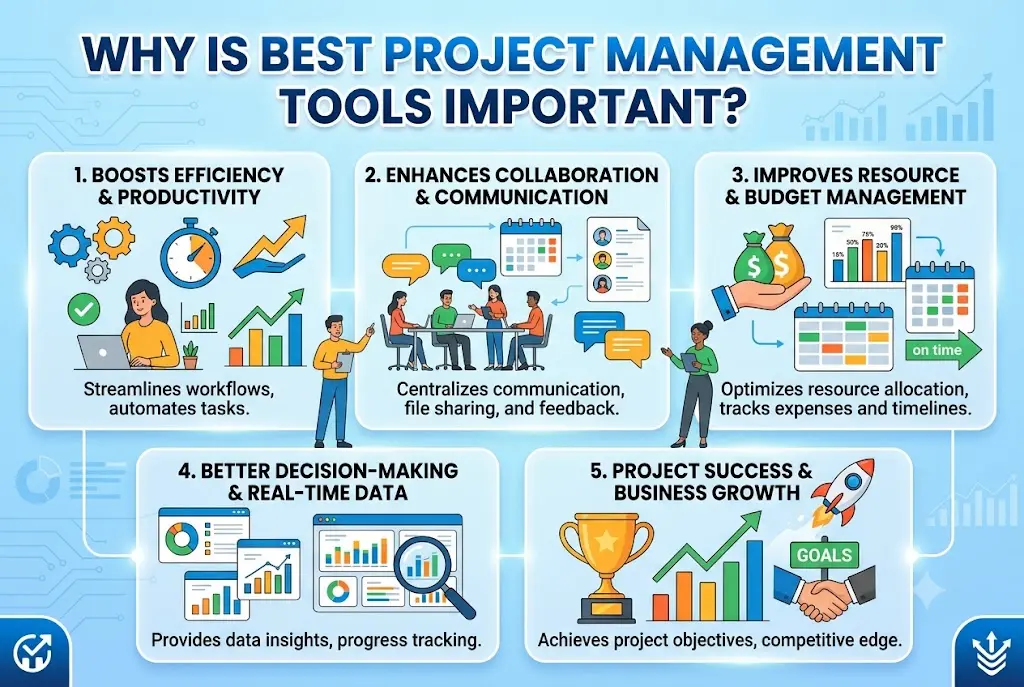
Businesses that implement modern accounting software often experience significant operational and financial improvements.
Increased Accuracy
Automated calculations reduce the risk of manual errors.
Benefits include:
- More reliable reports
- Accurate financial statements
- Better compliance
- Reduced correction costs
- Time Savings
Accounting software automates repetitive tasks that traditionally consume hours of manual work.
Examples include:
- Invoice generation
- Expense categorization
- Tax calculations
- Report preparation
Employees can focus on strategic activities rather than administrative work.
Better Cash Flow Management
Real-time financial visibility helps organizations monitor cash flow more effectively.
Businesses can:
- Track payments
- Monitor expenses
- Forecast future cash needs
- Identify financial risks early
- Improved Financial Reporting
Managers need accurate information to make informed decisions.
Accounting software provides reports such as:
- Profit and loss statements
- Balance sheets
- Cash flow reports
- Expense summaries
These reports support strategic planning and business growth.
Simplified Tax Compliance
Tax preparation becomes easier when financial data is organized and accurate.
Benefits include:
- Faster filing
- Reduced errors
- Better record keeping
- Improved compliance
- Enhanced Collaboration
Cloud-based accounting software allows multiple users to access financial information securely.
Business owners, accountants, and managers can collaborate efficiently from different locations.
Greater Scalability
As transaction volumes increase, accounting software can adapt to growing business requirements without major disruptions.
Stronger Decision-Making
Real-time financial insights allow leaders to identify trends, evaluate performance, and make smarter business decisions.
Disadvantages / Risks
While accounting software provides many benefits, there are also potential risks and challenges to consider.
Initial Costs
Businesses may face expenses related to:
- Subscription fees
- Setup services
- Training programs
- Data migration
These costs should be included in budgeting decisions.
Learning Curve
Some platforms include advanced features that require training and experience.
Without proper onboarding, employees may struggle with adoption.
Dependence on Technology
Software outages or technical problems can temporarily disrupt operations.
Having backup procedures helps reduce risk.
Data Migration Challenges
Moving financial records from existing systems can be complex.
Potential issues include:
- Missing data
- Duplicate entries
- Formatting inconsistencies
Careful planning is essential.
Security Risks
Although modern platforms offer strong protection, businesses must still implement proper security practices.
Weak passwords or poor access controls can create vulnerabilities.
Feature Overload
Some software solutions include numerous advanced capabilities that smaller businesses may never use.
Excessive complexity can reduce efficiency rather than improve it.
Ongoing Subscription Costs
Cloud-based platforms often require recurring monthly or annual payments.
Businesses should evaluate long-term affordability before committing.
Common Mistakes to Avoid
Many organizations fail to achieve maximum value from accounting software because they make preventable mistakes.
Choosing Software Based Only on Cost
The cheapest option may lack important features or support.
Instead, evaluate overall value and business fit.
Ignoring Future Growth
A solution that meets today’s needs may not support future expansion.
Choose software that can scale alongside your business.
Failing to Train Staff
Insufficient training often leads to:
- Data entry errors
- Low adoption rates
- Inefficient workflows
Investing in employee education improves long-term success.
Poor Data Organization
Accurate financial reporting depends on clean and organized records.
Regularly review:
- Expense categories
- Customer information
- Vendor details
- Transaction records
- Neglecting Security
Financial information must be protected through strong passwords, access controls, and regular security reviews.
Underutilizing Reports
Many businesses use accounting software solely for bookkeeping while ignoring valuable reporting features.
Reports provide insights that support smarter decision-making.
Skipping Software Reviews
Business needs change over time.
Regular software evaluations help ensure the platform continues meeting organizational requirements.
What is accounting software used for?
Accounting software helps businesses manage financial activities such as bookkeeping, invoicing, expense tracking, payroll, tax preparation, and reporting. It improves efficiency and accuracy while reducing manual work.
Why do small businesses need accounting software?
Small businesses benefit from better organization, improved cash flow visibility, faster reporting, and simplified tax preparation. Accounting software also saves valuable time and reduces errors.
Is cloud-based accounting software safe?
Most reputable providers use advanced security measures including encryption, backups, and multi-factor authentication. However, businesses should also follow good security practices internally.
Can accounting software replace an accountant?
Accounting software can automate many bookkeeping tasks, but professional accountants still provide valuable expertise for tax planning, compliance, auditing, and financial strategy.
How much does accounting software cost?
Pricing varies depending on features, users, and provider plans. Businesses should compare pricing structures and evaluate long-term value before making a decision.
What features should businesses prioritize?
Key features often include:
Expense tracking
Invoicing
Financial reporting
Payroll management
Tax support
Integrations
Security features
The ideal feature set depends on business requirements.
How long does implementation take?
Implementation timelines vary based on company size and complexity. Small businesses may complete setup within a few days, while larger organizations may require several weeks.
Can accounting software help improve profitability?
Can accounting software help improve profitability?
Expert Tips & Bonus Points
Choosing the Best Accounting Software for Businesses is only the first step. To maximize its value, organizations should follow proven best practices that improve adoption, efficiency, and financial accuracy.
Expert Tip 1: Focus on Simplicity First
Many businesses select software packed with advanced features but struggle to use it effectively.
Start with core functions such as:
- Expense tracking
- Invoicing
- Reporting
- Bank reconciliation
Once employees become comfortable, additional features can be introduced gradually.
Expert Tip 2: Automate Repetitive Tasks
Automation is one of the greatest advantages of modern accounting software.
Consider automating:
- Recurring invoices
- Payment reminders
- Expense categorization
- Financial reports
- Bank transaction imports
Automation saves time while reducing manual errors.
Expert Tip 3: Review Financial Reports Monthly
Many business owners only review reports during tax season. This approach can lead to missed opportunities and delayed problem detection.
Monthly reviews help identify:
- Revenue trends
- Rising expenses
- Cash flow concerns
- Profitability changes
Regular analysis supports better decision-making throughout the year.
Expert Tip 4: Maintain Accurate Data
Even the most advanced software cannot produce reliable insights if the underlying data is inaccurate.
Establish procedures for:
- Recording transactions promptly
- Reviewing entries regularly
- Correcting errors quickly
- Updating customer information
Clean data leads to better reporting and stronger financial control.
Expert Tip 5: Limit User Access
Not every employee requires full access to financial records.
Use role-based permissions to:
- Protect sensitive information
- Reduce security risks
- Improve accountability
- Maintain compliance
Proper access management strengthens overall security.
Expert Tip 6: Integrate Business Systems
Accounting software becomes more valuable when connected with other business applications.
Useful integrations include:
- Payroll systems
- Customer management platforms
- Inventory software
- E-commerce stores
- Payment processors
Integrated workflows reduce duplicate work and improve accuracy.
Expert Tip 7: Plan for Growth
Businesses often outgrow their initial software selection because they focus only on current needs.
When evaluating solutions, consider:
- Future employee growth
- Increased transaction volume
- Additional reporting requirements
- Expansion into new markets
Scalable software reduces the need for costly migrations later.
Expert Tip 8: Back Up Important Data
Although cloud providers generally perform automatic backups, businesses should still maintain contingency plans.
Backup strategies help protect against:
- System failures
- Human errors
- Security incidents
- Unexpected disruptions
Preparation minimizes downtime and financial risk.
Bonus Point: Create Financial Dashboards
Custom dashboards provide immediate visibility into key metrics.
Examples include:
- Monthly revenue
- Operating expenses
- Outstanding invoices
- Cash flow position
- Profit margins
Dashboards allow managers to monitor business performance quickly and efficiently.
Bonus Point: Establish Financial Processes
Accounting software works best when supported by consistent procedures.
Document processes for:
- Invoice approvals
- Expense submissions
- Vendor payments
- Financial reviews
- Report distribution
Standardization improves efficiency and reduces confusion.
Conclusion
The Best Accounting Software for Businesses has become an essential component of modern financial management. As organizations face increasing competition and growing operational complexity, relying on manual bookkeeping methods is no longer an efficient solution. Accounting software simplifies financial processes, improves accuracy, and provides valuable insights that support informed decision-making.
From tracking expenses and generating invoices to monitoring cash flow and preparing tax records, accounting software helps businesses maintain stronger financial control. Automated workflows reduce administrative burdens, while real-time reporting allows managers to identify opportunities and address challenges more effectively. These capabilities contribute directly to improved productivity, compliance, and profitability.
However, selecting the right platform requires careful planning. Businesses should evaluate their goals, budget, required features, security requirements, and future growth plans before making a decision. Equally important is ensuring proper employee training and maintaining accurate financial records after implementation.
While every organization has unique needs, the benefits of accounting software are clear. Improved efficiency, stronger reporting, better cash flow management, and enhanced decision-making make it a valuable investment for businesses of all sizes. By following the strategies, recommendations, and best practices outlined in this guide, organizations can confidently choose the Best Accounting Software for Businesses and build a stronger financial foundation for long-term success.
The right accounting solution is more than a bookkeeping tool. It is a strategic asset that helps businesses operate more effectively, adapt to changing market conditions, and achieve sustainable growth in an increasingly competitive business environment.
