
Introduction
Choosing the best CRM software for small businesses can be one of the most important decisions a business owner makes. Customer relationships are the foundation of every successful company, and managing those relationships effectively becomes increasingly challenging as a business grows. While spreadsheets, notebooks, and email folders may work in the early stages, they often become inefficient once customer data starts increasing.
A Customer Relationship Management system, commonly known as CRM software, helps businesses organize customer information, track interactions, manage sales opportunities, and improve communication across teams. Instead of searching through multiple files or applications, employees can access everything they need from a centralized platform.
Today, small businesses compete in highly competitive markets where customer experience plays a major role in success. Customers expect quick responses, personalized communication, and seamless service. Without a structured system, meeting these expectations can be difficult. This is where CRM software provides significant value.
Modern CRM platforms are designed not only for large corporations but also for startups and growing businesses. Many solutions offer affordable plans, user-friendly interfaces, and scalable features that adapt as a company expands.
This guide explores everything you need to know about the best CRM software for small businesses. You will learn how CRM systems work, why they matter, which features to prioritize, and how to choose the right solution for your organization. Whether you are a beginner or have some experience with CRM tools, this guide will help you make an informed decision.
What is Best CRM Software for Small Businesses?
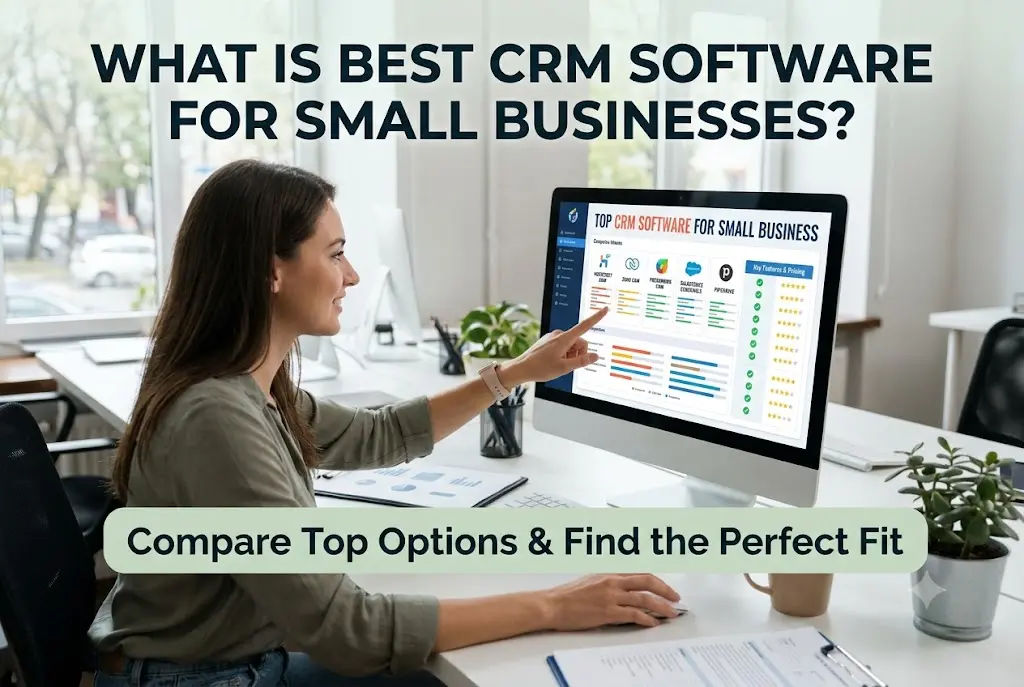
The best CRM software for small businesses is a digital platform that helps organizations manage customer relationships, sales activities, communication records, and business processes from a single location.
CRM software serves as a central database where businesses can store and organize customer information. Instead of maintaining separate files, businesses can access contact details, purchase histories, communication records, and sales opportunities within one system.
A CRM typically helps businesses manage:
- Customer contact information
- Lead generation activities
- Sales pipelines
- Marketing campaigns
- Customer support interactions
- Team collaboration
- Reporting and analytics
- Automated workflows
For example, imagine a small web design agency with dozens of clients and prospects. Without a CRM, team members may struggle to remember previous conversations, project discussions, or follow-up schedules. A CRM records every interaction and ensures important information remains accessible to everyone involved.
Modern CRM solutions also provide automation features that reduce repetitive tasks. Businesses can automatically send emails, schedule reminders, assign leads, and generate reports without manual effort.
The primary goal of CRM software is simple: improve customer relationships while increasing operational efficiency and revenue growth.
Why is Best CRM Software for Small Businesses Important?
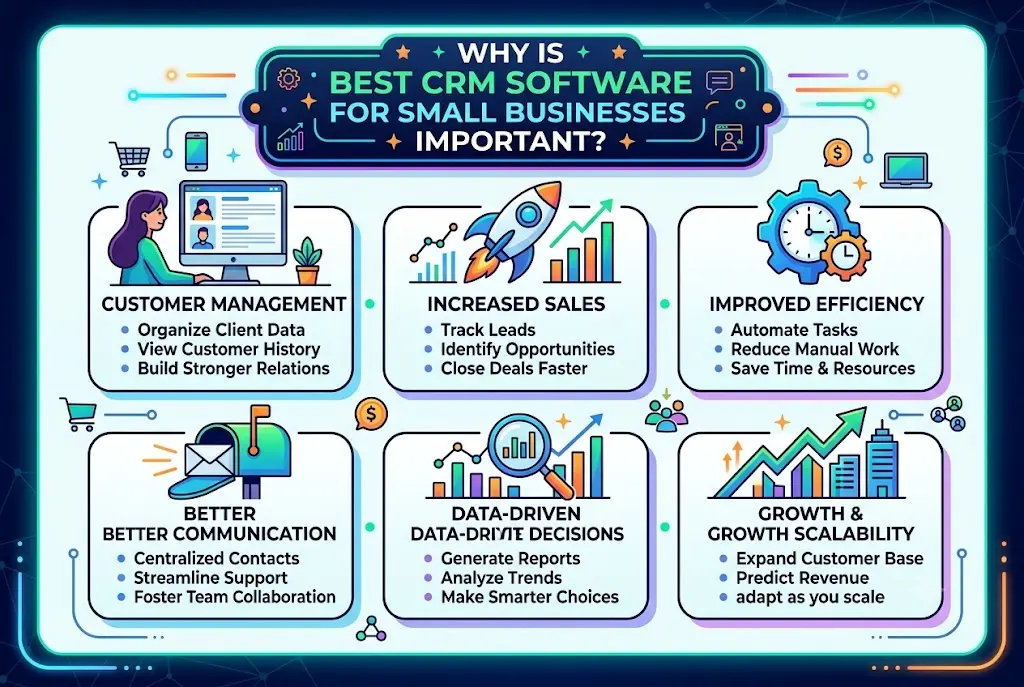
Many business owners underestimate the impact a CRM system can have on daily operations. However, the benefits often become apparent once customer data and sales activities begin growing.
Better Customer Relationships
Customers appreciate personalized experiences. CRM software stores valuable information about customer preferences, purchasing behavior, and communication history. This enables businesses to provide more relevant and personalized interactions.
Improved Lead Management
Lead management is one of the most valuable functions of a CRM platform. Businesses can track leads from initial contact through the final sale, ensuring opportunities are not lost.
Increased Productivity
Employees spend less time searching for information and more time focusing on high-value tasks. Automated workflows eliminate repetitive administrative work.
Stronger Team Collaboration
Departments often struggle when information is scattered across different systems. CRM software centralizes customer data and promotes collaboration among sales, marketing, and customer service teams.
Better Sales Forecasting
Business owners can analyze sales pipelines and predict future revenue more accurately. This supports better planning and decision-making.
Enhanced Customer Support
Support teams gain access to customer histories, previous inquiries, and purchase records, allowing them to resolve issues faster and more effectively.
Scalability
As businesses grow, CRM software grows with them. New users, customers, and workflows can be added without disrupting operations.
Detailed Step-by-Step Guide
Step 1: Understand Your Business Goals
Before comparing CRM solutions, identify the specific challenges your business wants to solve.
Ask questions such as:
- Are leads slipping through the cracks?
- Is customer information difficult to access?
- Do employees spend too much time on manual tasks?
- Is customer retention becoming a problem?
- Do you need better reporting?
Clearly defined goals make it easier to choose the right CRM.
Step 2: Determine Your Budget
CRM pricing varies significantly between providers.
When setting a budget, consider:
- Monthly subscription fees
- User licensing costs
- Implementation expenses
- Training costs
- Future upgrades
The best CRM software for small businesses should deliver strong value rather than simply being the lowest-cost option.
Step 3: Identify Essential Features
Not all businesses need every CRM feature. Focus on the functions that support your goals.
Important features include:
- Contact management
- Lead tracking
- Sales pipeline management
- Email integration
- Workflow automation
- Reporting dashboards
- Mobile applications
- Task management
Create a list of must-have features before evaluating vendors.
Step 4: Compare Popular CRM Categories
CRM solutions generally fall into several categories.
Operational CRM
Operational CRM focuses on automating sales, marketing, and customer service activities.
Analytical CRM
Analytical CRM emphasizes reporting, customer insights, and performance analysis.
Collaborative CRM
Collaborative CRM improves communication among teams and departments.
Small businesses often benefit most from operational CRM systems because they simplify daily processes.
Step 5: Evaluate Ease of Use
A CRM should simplify work rather than create additional complexity.
Look for:
- Intuitive dashboards
- Easy navigation
- Minimal training requirements
- Fast setup process
- Clear user interface
Employees are more likely to adopt a CRM system when it feels simple and convenient.
Step 6: Assess Integration Options
Most businesses already use multiple software tools.
Your CRM should integrate with:
- Email platforms
- Marketing software
- Accounting systems
- E-commerce platforms
- Customer support tools
- Calendar applications
Strong integrations eliminate duplicate data entry and improve efficiency.
Step 7: Test Through Free Trials
Many CRM vendors offer free trials or demos.
During testing:
- Add sample contacts.
- Create sales opportunities.
- Explore reporting tools.
- Test automation workflows.
- Evaluate mobile access.
- Gather feedback from employees.
Hands-on testing often reveals strengths and weaknesses that marketing materials cannot show.
Step 8: Examine Customer Support
Reliable support becomes especially important during implementation.
Evaluate:
- Live chat availability
- Phone support options
- Email response times
- Training resources
- Knowledge base quality
Responsive support can save time and prevent frustration.
Step 9: Consider Future Growth
A CRM should support your business not only today but also in the future.
Consider whether the system can accommodate:
- Additional employees
- More customers
- Expanded automation
- Advanced reporting
- Multiple business locations
Selecting a scalable platform reduces the likelihood of switching systems later.
Step 10: Make the Final Selection
After evaluating all options, compare providers based on:
- Features
- Cost
- User experience
- Security
- Integrations
- Customer support
- Scalability
Choose the platform that aligns most closely with your business goals and long-term strategy.
Top Features to Look for in CRM Software
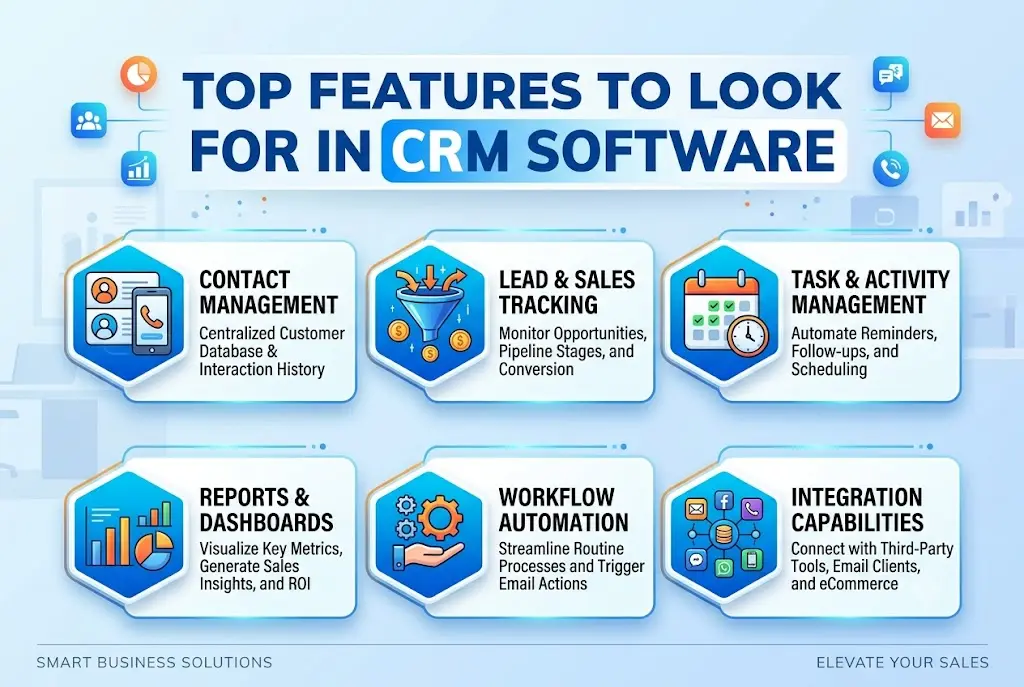
The best CRM software for small businesses typically includes several essential features that improve efficiency and customer management.
Contact Management
Contact management allows businesses to store customer information in one place.
Information may include:
- Names
- Email addresses
- Phone numbers
- Purchase history
- Communication records
This feature ensures employees always have access to accurate customer information.
Lead Management
Lead management tools help businesses track potential customers through every stage of the sales process.
Benefits include:
- Better lead organization
- Improved follow-up consistency
- Higher conversion rates
- More efficient sales processes
Sales Pipeline Tracking
A visual sales pipeline helps teams monitor progress and identify opportunities that require attention.
Sales managers can quickly see:
- New leads
- Active negotiations
- Closed deals
- Lost opportunities
Workflow Automation
Automation eliminates repetitive tasks and improves efficiency.
Common automation examples include:
- Follow-up reminders
- Email sequences
- Task assignments
- Lead routing
- Report generation
Automation allows employees to focus on relationship-building rather than administrative work.
Reporting and Analytics
Data-driven decisions are essential for business growth. CRM reporting tools provide insights into customer behavior, sales performance, and team productivity.
Useful reports may include:
- Sales forecasts
- Conversion rates
- Customer retention metrics
- Revenue trends
- Lead source performance
These insights help business owners identify opportunities and address potential problems before they become serious.
Mobile Accessibility
Modern business owners and sales representatives often work remotely. Mobile CRM applications allow users to access customer information, update records, and communicate with clients from anywhere.
Mobile access improves responsiveness and ensures important information is always available when needed.
Email Integration
Email remains one of the most important communication channels for businesses. CRM systems with email integration automatically record communications, reducing manual data entry and improving organization.
Benefits include:
- Centralized communication records
- Automated email tracking
- Improved follow-up management
- Better customer visibility
Customer Support Management
Many CRM platforms include customer service features that help businesses track support requests and resolve issues efficiently.
These tools can improve customer satisfaction by ensuring inquiries receive prompt attention and follow-up.
Popular Types of CRM Users in Small Businesses
CRM software benefits businesses across various industries.
Retail Businesses
Retail companies use CRM systems to track customer purchases, manage loyalty programs, and personalize marketing campaigns.
For example, a clothing store can identify frequent buyers and offer targeted promotions based on previous purchases.
Service-Based Businesses
Consultants, agencies, repair services, and freelancers often rely on CRM software to manage client relationships and project communication.
A CRM helps ensure appointments, follow-ups, and service requests remain organized.
Real Estate Professionals
Real estate agents manage numerous leads, property inquiries, and client interactions. CRM software simplifies communication and lead tracking throughout the buying or selling process.
Healthcare Practices
Healthcare providers can use CRM platforms to manage patient communications, appointment reminders, and customer service activities.
E-Commerce Businesses
Online stores often integrate CRM systems with their websites to track customer behavior, purchasing patterns, and marketing effectiveness.
Educational Institutions
Training centers and educational organizations use CRM software to manage student inquiries, enrollment processes, and ongoing communication.
Benefits of Best CRM Software for Small Businesses
Implementing the best CRM software for small businesses offers a wide range of advantages that contribute directly to business growth and customer satisfaction.
Improved Organization
A CRM centralizes customer information, making it easier to access records whenever needed.
Instead of searching through spreadsheets or emails, employees can find information quickly and efficiently.
Better Customer Experience
Customers value personalized interactions. CRM systems provide detailed customer histories, allowing businesses to tailor communication and services.
Increased Sales Opportunities
Sales teams can track leads more effectively and maintain consistent follow-up schedules.
This often leads to:
- Higher conversion rates
- More repeat business
- Stronger customer relationships
Time Savings
Automation reduces the need for manual tasks such as data entry, scheduling reminders, and creating reports.
Employees can focus on activities that generate revenue and strengthen customer relationships.
Enhanced Collaboration
When teams share access to the same information, communication improves significantly.
Sales, marketing, and customer service departments can work together more effectively.
Better Decision-Making
CRM analytics provide valuable insights into customer behavior and business performance.
Leaders can make informed decisions based on accurate data rather than assumptions.
Improved Customer Retention
Retaining existing customers is often more cost-effective than acquiring new ones.
CRM software helps businesses maintain consistent communication and build stronger long-term relationships.
Scalability
As customer numbers increase, CRM systems provide the structure needed to maintain organization and efficiency.
Businesses can expand without losing control of important information.
Stronger Marketing Performance
Marketing teams can segment audiences, personalize campaigns, and measure performance more accurately.
This leads to higher engagement and better return on investment.
Greater Accountability
Managers can track employee activities, monitor progress, and ensure important tasks are completed on time.
Disadvantages / Risks
Although CRM systems provide substantial benefits, there are some disadvantages and risks that businesses should understand before implementation.
Initial Costs
Even affordable CRM solutions require investment.
Costs may include:
- Subscription fees
- Setup expenses
- Employee training
- Data migration
Small businesses should evaluate the long-term value rather than focusing only on upfront costs.
Learning Curve
Employees may require time to become comfortable with a new system.
Without proper training, adoption rates may suffer.
Data Migration Challenges
Moving customer information from spreadsheets or legacy systems can be complicated.
Poor migration planning may result in:
- Duplicate records
- Missing information
- Data inconsistencies
Overdependence on Technology
Businesses that rely heavily on CRM systems may experience challenges during outages or technical issues.
Maintaining backups and contingency plans is important.
Security Concerns
Customer information is valuable and sensitive.
If security measures are inadequate, businesses may face risks such as:
- Unauthorized access
- Data breaches
- Compliance violations
Feature Overload
Some CRM platforms include advanced capabilities that small businesses may never use.
Excessive features can increase complexity and reduce user adoption.
Ongoing Costs
Subscription fees continue over time and may increase as businesses add users or advanced features.
Customization Limitations
Certain CRM systems offer limited flexibility.
Businesses with highly specialized workflows may need additional customization or third-party solutions.
Common Mistakes to Avoid
Many businesses fail to achieve maximum CRM value because they make avoidable mistakes during implementation and usage.
Choosing a CRM Without Clear Objectives
Businesses sometimes purchase CRM software simply because competitors use it.
Instead, define specific goals before selecting a platform.
Examples include:
- Increasing lead conversions
- Improving customer retention
- Automating repetitive tasks
- Enhancing reporting capabilities
Focusing Only on Price
Price is important, but it should not be the sole decision factor.
A low-cost CRM that lacks critical features may create more problems than it solves.
Ignoring Employee Input
Employees use CRM systems daily and often provide valuable feedback.
Including team members in the selection process improves adoption and satisfaction.
Skipping Training
Even user-friendly systems require training.
Businesses that fail to educate employees often experience low adoption rates and inconsistent data entry.
Poor Data Quality
A CRM is only as effective as the information stored within it.
Common data quality issues include:
- Duplicate contacts
- Incomplete records
- Outdated information
- Incorrect details
Regular data cleaning is essential.
Neglecting Automation Opportunities
Many businesses underutilize automation features.
Proper automation can save significant time and improve consistency across operations.
Failing to Monitor Performance
CRM implementation should not be treated as a one-time project.
Businesses should regularly review:
- User adoption rates
- Sales performance
- Customer satisfaction
- Workflow efficiency
Continuous improvement ensures long-term success.
Overcomplicating Workflows
Complex processes often discourage employees from using the system.
Keep workflows simple and focused on business objectives.
Ignoring Mobile Functionality
Teams that work remotely need access to CRM information outside the office.
Failing to evaluate mobile capabilities can limit productivity.
Not Planning for Growth
Businesses sometimes choose systems that meet current needs but cannot support future expansion.
Scalability should always be considered during the selection process.
CRM Implementation Best Practices
Successful implementation requires more than simply purchasing software.
Follow these best practices for better results.
Establish Clear Goals
Define measurable objectives before implementation begins.
Examples include:
- Increasing sales by 20%
- Reducing response times
- Improving customer retention rates
Assign Responsibility
Designate a CRM administrator or project leader to oversee implementation and ongoing management.
Create Standard Processes
Develop consistent procedures for:
- Data entry
- Lead management
- Customer communication
- Reporting
Standardization improves data quality and operational efficiency.
Train Employees Thoroughly
Provide ongoing education rather than one-time training sessions.
Employees should understand both the technical features and the business benefits of the CRM.
Start Small
Begin with core features before introducing advanced capabilities.
This approach reduces complexity and improves adoption.
Measure Results
Track performance indicators regularly to evaluate success and identify opportunities for improvement.
What is CRM software and why do small businesses need it?
CRM software, or Customer Relationship Management software, helps businesses organize customer information, track interactions, manage sales opportunities, and improve communication. Small businesses need CRM systems because they make customer management more efficient and reduce the risk of losing valuable leads. Instead of relying on spreadsheets or scattered records, teams can access all customer information from one centralized platform.
CRM software also improves productivity by automating repetitive tasks and providing valuable insights into customer behavior. As a result, businesses can deliver better customer experiences and increase revenue.
What is the best CRM software for small businesses?
The best CRM software for small businesses depends on specific business requirements, budget, and goals. Some businesses prioritize sales automation, while others focus on customer support or marketing capabilities.
When evaluating CRM solutions, consider:
Ease of use
Pricing
Scalability
Integration options
Customer support
Reporting features
A CRM that aligns with your workflows and future growth plans is usually the best choice.
How much does CRM software cost?
CRM pricing varies significantly depending on the provider and feature set.
Common pricing structures include:
Free plans with limited features
Monthly subscriptions per user
Tiered business packages
Enterprise-level pricing
Small businesses should compare costs carefully and consider the long-term value rather than focusing solely on the monthly fee. Sometimes paying slightly more for better features and support can produce a stronger return on investment.
Can CRM software help increase sales?
Yes, CRM software can significantly improve sales performance.
CRM systems help businesses:
Track leads effectively
Automate follow-ups
Monitor sales pipelines
Improve communication
Identify high-value opportunities
By maintaining consistent engagement with prospects and customers, businesses often experience higher conversion rates and stronger customer retention.
Is CRM software difficult to learn?
Most modern CRM platforms are designed with user-friendly interfaces and intuitive navigation.
While some training is required, many systems provide:
Tutorials
Knowledge bases
Video training
Customer support
Guided onboarding
The learning process becomes easier when businesses select a CRM that matches their technical skill level and operational needs.
How long does CRM implementation take?
Implementation timelines vary based on business size and complexity.
Simple deployments may take only a few days, while larger implementations can require several weeks.
Factors that influence implementation time include:
Data migration requirements
Number of users
Customization needs
Training requirements
Integration complexity
Proper planning helps ensure a smoother implementation process.
What features should small businesses prioritize?
Although requirements differ by industry, most small businesses should prioritize:
Contact management
Lead tracking
Sales pipeline management
Reporting and analytics
Workflow automation
Email integration
Mobile access
These features provide the foundation needed to improve customer management and operational efficiency.
Is cloud-based CRM better than on-premise CRM?
For most small businesses, cloud-based CRM solutions offer several advantages.
Benefits include:
Lower upfront costs
Remote accessibility
Automatic updates
Easier maintenance
Faster deployment
On-premise systems may provide greater control but often require higher investments in hardware, maintenance, and technical expertise.
9. Can CRM software improve customer service?
Absolutely. CRM software gives support teams access to complete customer histories, previous conversations, and purchase records.
This allows representatives to:
Respond faster
Personalize interactions
Resolve issues efficiently
Improve customer satisfaction
Better customer service often leads to stronger loyalty and repeat business.
10. How do I know if my business is ready for a CRM?
Several signs indicate that a business may benefit from CRM software:
Customer information is difficult to organize.
Leads are being lost.
Follow-ups are inconsistent.
Teams struggle with communication.
Reporting is time-consuming.
Customer numbers are increasing rapidly.
If any of these challenges sound familiar, implementing a CRM system may be a valuable next step.
Expert Tips & Bonus Points
Choosing the best CRM software for small businesses is only the beginning. The way a company uses the platform often determines the level of success achieved.
Expert Tip 1: Focus on Adoption First
Many CRM projects fail because employees do not use the system consistently.
Encourage adoption by:
- Providing proper training
- Demonstrating benefits
- Keeping processes simple
- Offering ongoing support
A CRM only creates value when employees actively use it.
Expert Tip 2: Keep Data Clean
Accurate data improves reporting, communication, and decision-making.
Regularly review records to remove:
- Duplicate contacts
- Outdated information
- Incomplete entries
- Inactive leads
Clean data ensures reliable insights.
Expert Tip 3: Automate Strategically
Automation can save significant time, but excessive automation may feel impersonal.
Focus automation on repetitive tasks such as:
- Reminder notifications
- Follow-up scheduling
- Lead assignments
- Report generation
Maintain a personal touch when communicating with customers.
Expert Tip 4: Use Reporting Frequently
CRM reports provide valuable information that can guide business decisions.
Review reports regularly to identify:
- Sales trends
- Conversion opportunities
- Customer behavior patterns
- Team performance issues
Consistent analysis helps businesses remain competitive.
Expert Tip 5: Integrate Your Tools
A CRM becomes more powerful when connected with other business applications.
Useful integrations may include:
- Email platforms
- Accounting software
- Marketing tools
- E-commerce systems
- Customer support platforms
Integrated systems reduce manual work and improve efficiency.
Expert Tip 6: Customize Carefully
Most CRM platforms offer customization options.
However, excessive customization can increase complexity.
Focus on modifications that support business goals while maintaining simplicity and usability.
Expert Tip 7: Measure Return on Investment
Businesses should track the impact of CRM software on key performance indicators.
Metrics may include:
- Sales growth
- Lead conversion rates
- Customer retention
- Response times
- Employee productivity
Measuring results helps justify investment and identify improvement opportunities.
Bonus Point: Build Customer-Centric Processes
Technology alone does not create excellent customer relationships.
Use CRM software to support a customer-focused culture by:
- Listening to customer feedback
- Responding promptly
- Personalizing interactions
- Delivering consistent experiences
Businesses that prioritize customer satisfaction often achieve stronger long-term growth.
Bonus Point: Review CRM Performance Annually
Business needs change over time.
Conduct annual evaluations to determine whether your CRM continues to support organizational goals. Review features, costs, integrations, and user feedback to ensure the platform remains effective.
Conclusion
The best CRM software for small businesses has become an essential tool for organizations that want to improve customer relationships, increase efficiency, and support sustainable growth. In today’s competitive business environment, customers expect personalized experiences, quick responses, and consistent communication. Meeting these expectations becomes much easier when businesses have a reliable CRM system in place.
CRM software provides a centralized location for managing customer information, tracking sales activities, automating workflows, and analyzing performance. These capabilities help businesses reduce administrative workloads while improving productivity and decision-making. Whether a company is focused on sales growth, customer retention, or operational efficiency, CRM software can contribute significantly to achieving those objectives.
However, selecting the right CRM requires careful planning. Businesses should evaluate their goals, budget, required features, integration needs, and future growth plans before making a decision. A platform that aligns with both current requirements and long-term objectives is more likely to deliver lasting value.
Successful CRM implementation also depends on employee adoption, proper training, data quality, and ongoing optimization. Organizations that invest time in these areas often achieve stronger results and higher returns on investment.
Ultimately, the best CRM software for small businesses is not necessarily the most expensive or feature-rich option. Instead, it is the solution that best supports your unique business processes, helps strengthen customer relationships, and enables sustainable growth. By following the guidance provided in this article, business owners can make informed decisions and confidently choose a CRM platform that supports long-term success in an increasingly competitive marketplace.
